 how-to
How to Boil Country Ham Before Baking: Is It Necessary?
Last Updated: November 7, 2026
Quick Summary
Boiling is not always required, but it is the traditional first step for most salt-cured hams. Boil country ham in a simmering pot to ease its saltiness and tenderize the meat, then finish it in the oven with a glaze. Whether you boil or skip straight to baking depends on how salty your ham is and how you like it to taste.
- Boiling reduces saltiness and softens dense meat
- Baking alone works well for milder, thinner cuts
- Keep the water at a gentle simmer, never a rolling boil
- Cover the ham with cool water by about 2 inches
- Bake glazed ham at 325°F until the interior reaches 140°F
Table of Contents
- Is It Necessary to Boil Country Ham Before Baking?
- Choosing Between Whole, Half, and Boneless Country Ham
- How Long to Soak Country Ham to Reduce Saltiness
- How to Boil Country Ham: Pot, Water Level, and Simmering Time
- How Long to Cook a Country Ham Before and After Baking
- How to Cook Country Ham Slices in a Skillet or Oven
- Checking Doneness and Troubleshooting Texture and Flavor
- Planning Your Ham for Your Next Holiday Meal
- Frequently Asked Questions
Is It Necessary to Boil Country Ham Before Baking?
Boiling is not always required before baking a country ham, but it is the traditional first step for most salt-cured hams. At Padow's Hams Co., our hams are cured for 3 months using the Virginia salt cure recipe, and many home cooks find that a gentle simmer makes the ham easier to handle and more tender before it goes into the oven. Whether you boil or skip straight to baking depends on how salty your ham is and how you like it to taste.
A boil pulls out excess salt and softens the meat. A straight bake keeps more of the cure flavor in the ham. Most families that have cooked country ham for generations choose the boil, then finish the ham in the oven with a glaze.
- Boiling reduces saltiness and softens dense meat
- Baking alone works well for milder, thinner cuts
- Most traditional recipes call for boiling first, then baking
Choosing Between Whole, Half, and Boneless Country Ham
The cut you choose changes how you cook it. A whole ham has the most meat and takes the longest to cook. A half ham, either the shank or the butt end, cooks faster and fits in more home ovens and pots.
Boneless ham is the easiest to slice and serve, but it cooks unevenly if the bone is removed from a large piece. Check the cooking instructions for the exact cut you receive.
- Whole ham: longest cook time, best for big holiday tables
- Half ham: shorter cook time, fits a standard pot more easily
- Boneless: easiest to carve, needs closer attention while cooking
How Long to Soak Country Ham to Reduce Saltiness
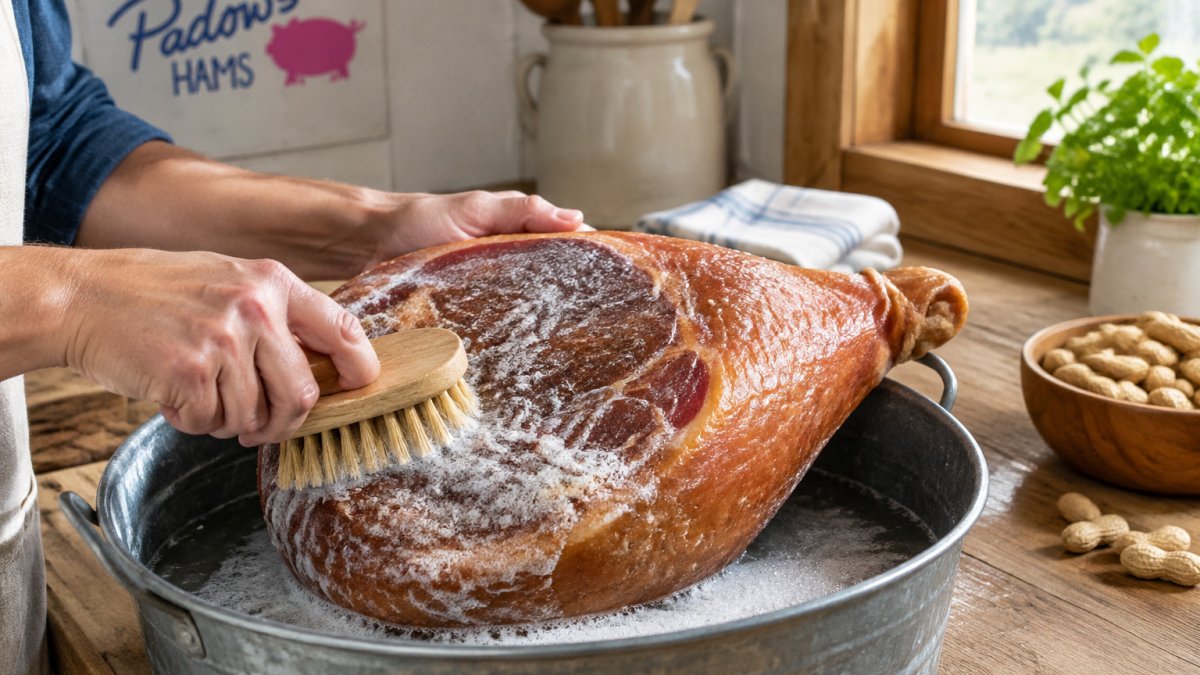
Soaking pulls surface salt out of the ham before cooking. Our step-by-step guide to desalting salt-cured ham walks through the process before dinner. Many cooks soak their ham in cool water for several hours, changing the water a few times. The exact time depends on how long the ham was cured and how salty you want the final dish to taste.
A lightly cured ham needs less soaking than a heavily cured one. Taste a small piece of the raw meat if you are unsure. If it tastes very salty, soak it longer.
- Change the soaking water every few hours
- Keep the ham cold while it soaks
- Test a small bite before deciding to soak longer
How to Boil Country Ham: Pot, Water Level, and Simmering Time
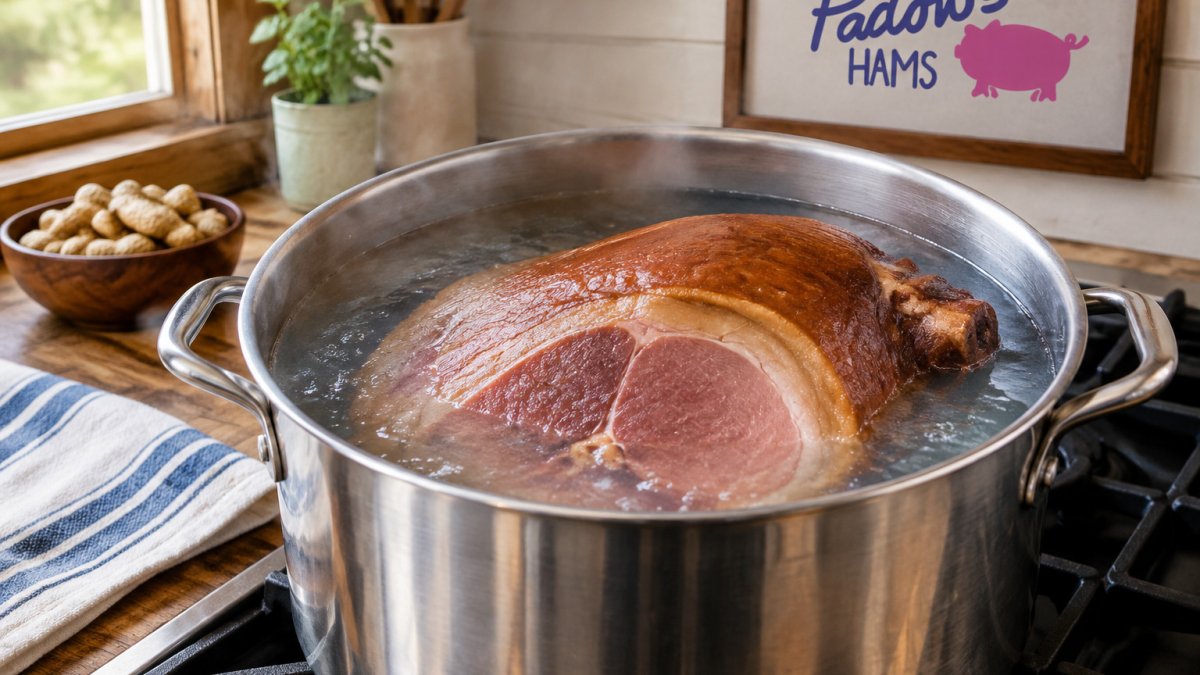
A whole country ham is a big, dense piece of meat, so the pot matters as much as the timing. For more on keeping the ham moist and tender through the whole cooking process, read how to keep a spiral ham from drying out. Choose a stockpot or canning pot wide enough that the ham sits flat on the bottom with at least an inch of water on every side. A 16- to 20-quart pot fits most whole hams in the 12- to 16-pound range; a half ham usually fits in a 10- to 12-quart pot. If the shank or hock sticks up above the waterline, add water or rotate the ham halfway through so every surface gets contact with the liquid.
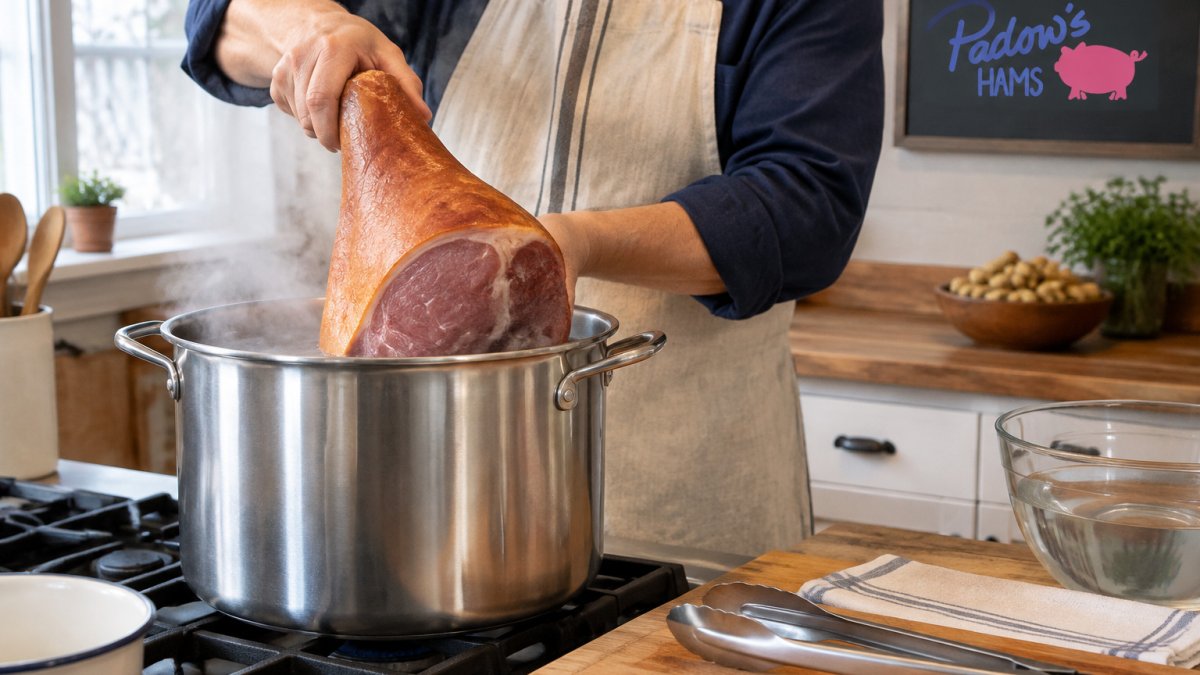
Cover the ham with cool water by about 2 inches. Some cooks add a splash of cider vinegar or a handful of brown sugar to the pot, but plain water is the traditional baseline and lets you taste how much salt the ham is giving up. Do not salt the water, the ham is already cured.
Bring the pot to a bare simmer over medium heat, then dial it back so the surface shows small, lazy bubbles rather than a churn. The ham itself is the better guide to doneness, so start checking early and go by how the meat feels.
You know the simmer is done when a fork or a thin skewer slides into the thickest part of the ham with little resistance and the meat pulls away from the bone slightly at the shank. If the meat still feels tight and springy, give it another 20 to 30 minutes and check again.
!A home cook at a kitchen stove lowering a whole country ham into a large stockpot, steam rising, with a cutting board and tongs nearby. The woman is American.
Avoiding a Rolling Boil
A hard, rolling boil can toughen a country ham. The churning water tightens the outer muscle fibers, pushes moisture out of the meat, and can leave the outside stringy while the center is still firm. Keep the water at a steady simmer, small bubbles breaking the surface, no violent movement, and lower the heat the moment the pot starts to churn. If your stove runs hot, set the pot half off the burner or use a heat diffuser.
Watch out: If the water drops below a simmer and goes still, the ham will cool and the timing becomes unreliable; nudge the heat back up so the surface stays gently active.
- Use a pot wide enough that the ham sits flat with water on all sides
- Cover the ham with cool water by about 2 inches; never salt the water
- Simmer, don't boil, small bubbles, no churn
- Start checking tenderness at the low end of the minutes-per-pound range
- The ham is ready when a skewer slides in easily and the meat pulls from the shank
How Long to Cook a Country Ham Before and After Baking
The simmer does the cooking; the oven does the finishing. For a full start-to-finish walkthrough, see cooking a country ham from start to finish. Once the ham is tender in the pot, lift it out carefully, it will be hot and the bone may loosen, and set it on a rack in a roasting pan to drain for 10 to 15 minutes. This rest lets surface moisture escape so the glaze will cling instead of sliding off.
While the ham rests, heat the oven to 325°F. With a sharp knife, peel away the rind and the thick leathery skin, leaving a thin, even layer of fat on the surface. Score that fat in a diamond pattern about 1/4 inch deep, which gives the glaze somewhere to pool and helps the fat render.
Stud the diamonds with whole cloves if you like the traditional flavor, then brush on your glaze. A simple glaze of brown sugar, a little mustard, and cider vinegar or orange juice works well; brush it on in a thin coat first, then add more near the end so the sugar does not burn.
Bake the glazed ham at 325°F for roughly 15 to 20 minutes per pound of the original weight, or until the glaze is bubbly and set and the ham is heated through. Insert an instant-read thermometer into the thickest part, away from the bone, to check that the ham is heated through. If the glaze starts to darken too fast, tent the ham loosely with foil.
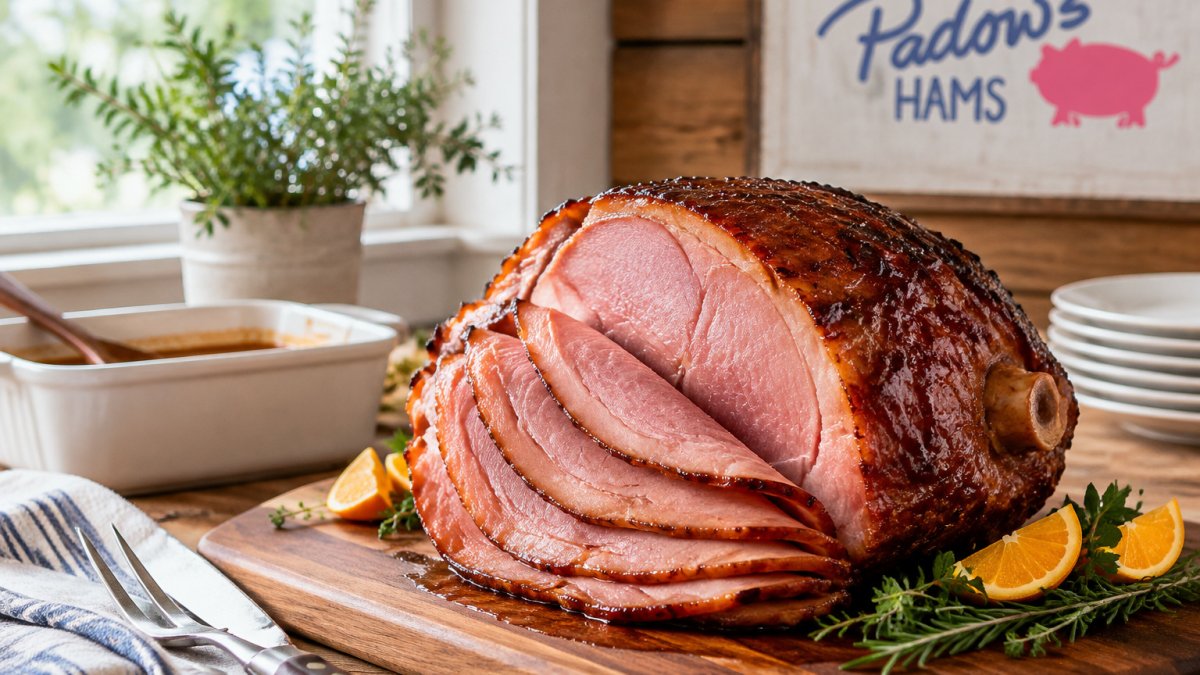
Let the baked ham rest 15 to 20 minutes before carving so the juices redistribute. Slice thin across the grain, and keep any pan drippings, they are excellent spooned over sliced ham or used to make red eye gravy.
- Rest the simmered ham 10 to 15 minutes before trimming
- Heat the oven to 325°F; remove rind, leave a thin fat layer, score in diamonds
- Glaze in thin coats; add the final coat in the last 15 minutes
- Bake about 15 to 20 minutes per pound until the glaze sets and the interior hits 140°F
- Rest 15 to 20 minutes before carving
How to Cook Country Ham Slices in a Skillet or Oven
Thin slices cook much faster than a whole ham. Our skillet guide for country ham slices covers soaking, timing, and red eye gravy step by step. Soak the slices briefly if they taste salty, then pan-fry them in a skillet over medium heat until lightly browned on both sides. Many cooks use the drippings to make red eye gravy.
You can also bake slices in a shallow pan in the oven. Cover them to keep them moist, then uncover for the last few minutes to crisp the edges.
- Soak slices briefly if they taste salty
- Pan-fry over medium heat until browned on both sides
- Use the pan drippings for red eye gravy
Checking Doneness and Troubleshooting Texture and Flavor
A tender ham should pierce easily with a fork and feel firm but not dry. Once it is cooked, our guide to serving country ham for holidays covers presentation, slicing, and pairing tips. If the meat is tough, it likely simmered too hard or too long, so next time keep the water at a gentle simmer. If the flavor is too salty, soak it longer before cooking.
If the ham dries out in the oven, add a little water to the pan and cover it with foil. Let the ham rest before carving so the juices settle.
- Tough meat usually means the water boiled too hard
- Overly salty flavor means the ham needs more soaking
- Dry meat improves with a covered pan and a rest before carving
Planning Your Ham for Your Next Holiday Meal
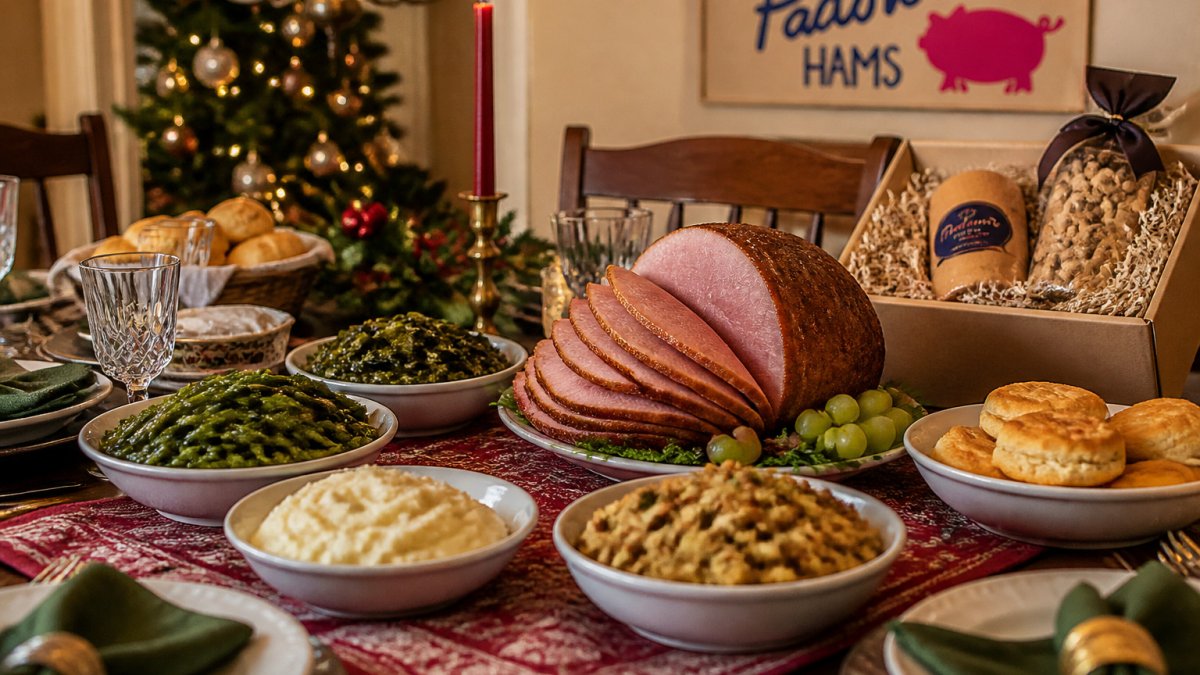
Plan your timing backward from the meal. A whole ham needs extra hours for soaking, simmering, and baking, so start the process at least a day or two before your guests arrive. Let the cooked ham rest before slicing so it stays juicy.
When you are ready to order your next ham, visit Padow's Hams Co. to see our current selection and find the cut that fits your table. For gift ideas, we also carry Virginia Peanuts and gift boxes.
Frequently Asked Questions
Can you bake a country ham without boiling it first?
Yes, many cooks bake a country ham directly, but the result depends on how salty the ham is. Heavily cured hams often benefit from a soak before cooking. Check the label and cure level before deciding. Whatever method you choose, cook the ham until the thickest part reaches an internal temperature of 140 degrees Fahrenheit, and rest it before carving.
How long should you soak a country ham before cooking it?
Soaking time depends on the ham's saltiness and size. Many cooks soak a cured ham in cold water, changing the water several times. Lightly cured hams need less soaking. Taste a small piece of the outer meat before cooking to judge how salty it is, and soak longer if it tastes too salty.
How do you know when country ham is done?
Use a meat thermometer. Insert it into the thickest part of the meat without touching the bone, and cook until it is heated through, or follow the specific temperature on your product's label. The surface should look browned and glazed if you have added one, and the meat should be tender but not falling apart.
Can I cook country ham slices without simmering them?
Yes. Thin slices can be pan-fried in a skillet over medium heat for a few minutes per side, or baked on a rack in a shallow pan. Soak thick slices briefly if they are very salty. Slices cook quickly, so watch them closely to avoid drying them out. Pan-fried slices often develop crisp edges that many people prefer for breakfast.