 how-to
How Do You Cook a Spiral Ham Without Drying It Out?
Last Updated: November 5, 2026
Quick Summary
To cook a spiral ham without drying it out, heat it covered with foil at a low 325°F, adding a little water or apple juice to the pan. Check the internal temperature and pull it at 140°F for a fully cooked ham, or 145°F for a cook-before-eating ham. Add the glaze only at the end, in a short run at 400°F.
- Read the label first: fully cooked and cook-before-eating hams need different final temperatures.
- Heat the ham cut-side down, covered tightly with foil, to trap steam and keep the slices moist.
- Budget about 10 to 15 minutes per pound for a fully cooked ham at 325°F.
- Brush on glaze only after removing the foil, then bake 10 to 20 minutes at 400°F.
- Rest the ham for 10 to 15 minutes before carving so the juices settle.
Table of Contents
- What You Need Before You Start Cooking Your Spiral Ham
- Step-by-Step: How to Cook a Pre Cooked Spiral Ham in the Oven
- Spiral Ham Cooking Time Chart by Weight and Oven Temperature
- How to Glaze a Spiral Ham Without Burning or Drying It
- How to Cook a Spiral Ham in a Slow Cooker
- Fixing Dry, Salty, or Unevenly Heated Ham Slices
- Planning Your Holiday Ham: Serving Sizes and Leftovers
- Frequently Asked Questions
What You Need Before You Start Cooking Your Spiral Ham
Start with the right ham, a roasting pan, and a few simple tools. Most spiral hams are fully cooked, so your job is mainly to warm the meat through without drying it out. Padow's Hams Co. offers a spiral sliced country ham and a full Spiral Ham Collection if you still need to pick one out.
Here is what to gather before the oven goes on:
- A roasting pan with low sides, large enough to hold the ham flat
- Aluminum foil to cover the ham while it heats
- A food thermometer to check the internal temperature
- A brush for applying glaze near the end of cooking
- Your glaze or sauce of choice, such as brown sugar, apple juice, or a mix with garlic powder and onion powder
- A carving knife and cutting board for serving
Check the label before you start. Some hams are labeled "fully cooked" and some are labeled "cook before eating." The cooking steps are different for each, so read the package first.
Step-by-Step: How to Cook a Pre Cooked Spiral Ham in the Oven
A spiral ham cooks best at a low, steady heat. Heat it slowly and it stays juicy. For more spiral-sliced cooking tips and times, see our companion guide. Blast it with high heat and the outer slices turn tough and dry.
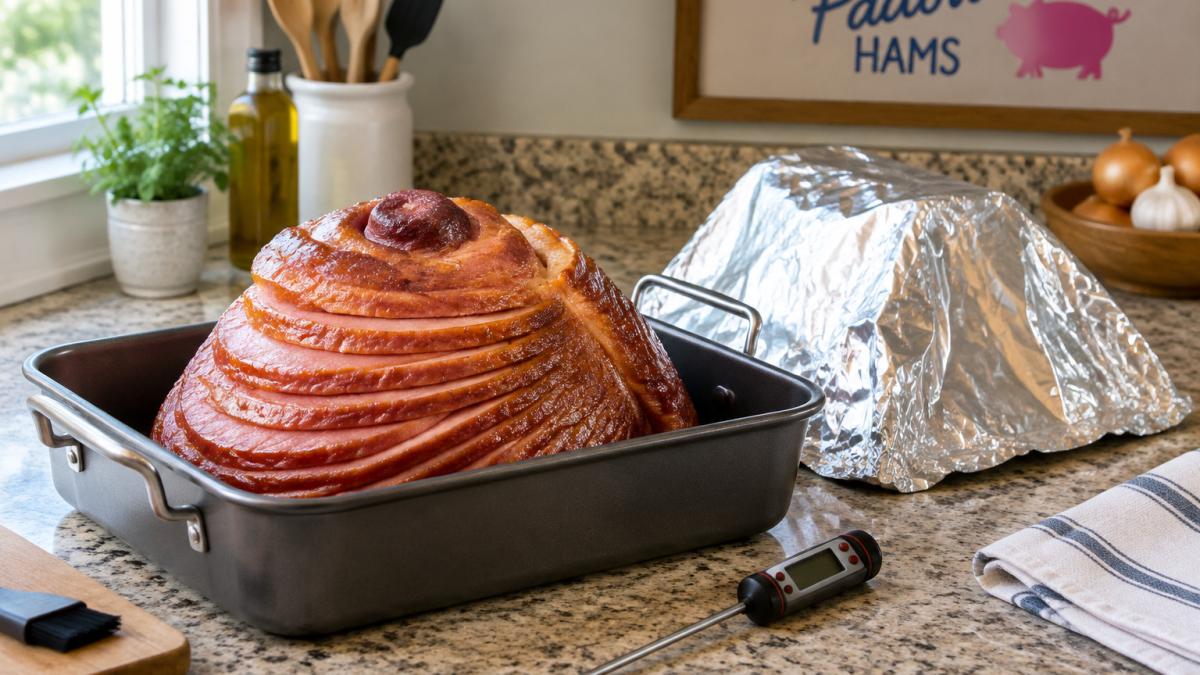
Before you set the oven, read the label. The two common labels call for different targets, and confusing them is the most frequent mistake home cooks make with spiral hams.
- "Fully cooked" means the ham was cooked during processing. Your job is to warm it through. The food-safety target is 140°F in the thickest part.
- "Cook before eating" means the ham is cured but raw. The food-safety target is 145°F with a three-minute rest. Do not pull this ham at 140°F.
- "Fresh" ham is uncured pork that must be cooked to 145°F with a three-minute rest, and it needs a longer cook than a cured spiral ham.
If the label is missing or unclear, treat the ham as cook-before-eating and take it to 145°F.
Follow these steps:
- Preheat the oven to 325°F. Set a rack in the lower third of the oven.
- Place the ham cut-side down in the roasting pan. Cut-side down keeps moisture in the slices and keeps the spiral cuts from splaying open.
- Add a half cup to one cup of water or apple juice to the bottom of the pan. This creates steam and keeps the pan drippings from scorching.
- Cover the ham tightly with aluminum foil. Seal the edges so steam stays trapped. A loose tent lets moisture escape and the edges dry out.
- Heat for about 10 to 15 minutes per pound for a fully cooked ham, or 15 to 20 minutes per pound for a cook-before-eating ham. A 10-pound fully cooked ham usually needs about 2 to 2.5 hours.
- Check the internal temperature early. Start checking about 30 minutes before your estimated finish time. Insert the thermometer into the thickest part, away from the bone and away from any glaze. Pull the ham when it reads 140°F for fully cooked or 145°F for cook-before-eating.
- Remove the foil, brush on glaze, and raise the heat to 400°F. Bake 10 to 20 minutes until the glaze sets. Watch closely, sugar burns fast at this temperature.
- Rest the ham for 10 to 15 minutes before carving. The juices settle back into the meat, and the internal temperature will rise a few degrees during the rest.
A common mistake is skipping the foil. Without it, the exposed edges of the slices dry out long before the center warms through.
Watch out: If you are reheating a ham that was already sliced and refrigerated, the slices warm faster than a whole ham. Check the temperature at 20 minutes and then every 10 minutes after that, because sliced ham goes from warm to dry quickly.
Spiral Ham Cooking Time Chart by Weight and Oven Temperature
Use this chart as a starting point. Every oven runs a little differently, so trust your thermometer over the clock. The times below assume a fully cooked ham heated covered at the listed temperature; add roughly 25 percent for a cook-before-eating ham.
| Ham Weight | Oven at 325°F (covered) | Oven at 275°F (covered) | First Thermometer Check | Target Internal Temp |
|---|---|---|---|---|
| 5 pounds | About 50 to 75 minutes | About 75 to 90 minutes | 40 minutes | 140°F |
| 8 pounds | About 1.5 to 2 hours | About 2 to 2.5 hours | 1 hour | 140°F |
| 10 pounds | About 2 to 2.5 hours | About 2.5 to 3 hours | 1 hour 30 minutes | 140°F |
| 14 pounds | About 2.5 to 3 hours | About 3 to 3.5 hours | 2 hours | 140°F |
Lower temperatures take longer but give the most even results. If you are short on time, 325°F is a reliable middle ground.
How to plan your start time. Work backward from when you want to serve. Add the cook time, the 10- to 15-minute rest, and the 10- to 20-minute glaze step. For a 10-pound ham at 325°F, that means starting the oven about 3 hours before dinner. Starting early also leaves room to prepare a crisp side dish, and the same oven-timing mindset helps when cooking crispy potatoes.
How to use the thermometer checkpoints. The "first thermometer check" column tells you when to open the foil and take a reading. If the ham is more than 20°F below target, re-cover and keep going. If it is within 20°F, you can move to the glaze step. This is faster and more reliable than guessing from the clock.
Label-specific targets. A fully cooked ham is safe at 140°F. A cook-before-eating ham needs 145°F with a three-minute rest.
Why temperature beats time. Oven thermostats drift, pan size changes how fast heat reaches the meat, and a cold ham straight from the refrigerator takes longer than one that sat on the counter for 30 minutes. A thermometer reading is the only reliable signal that the center is warm.
Watch out: Do not rely on the pop-up timer that comes with some hams. Those timers are set for the processor's target, not yours, and they can pop late. Use a separate food thermometer in the thickest part, away from the bone.
How to Glaze a Spiral Ham Without Burning or Drying It
Glaze adds sweetness and shine, but sugar burns fast. Add it at the end, not at the start.
Try this simple brown sugar glaze:
- 1/2 cup brown sugar
- 2 tablespoons apple juice
- 1 teaspoon garlic powder
- 1 teaspoon onion powder
Mix the ingredients until smooth. Then:
- Brush the glaze on only after the foil comes off. Glaze under foil can steam and turn gummy.
- Keep the oven at 400°F for the final step only. Stay close and watch the ham.
- Brush once or twice. Each layer builds color. Too many layers can burn.
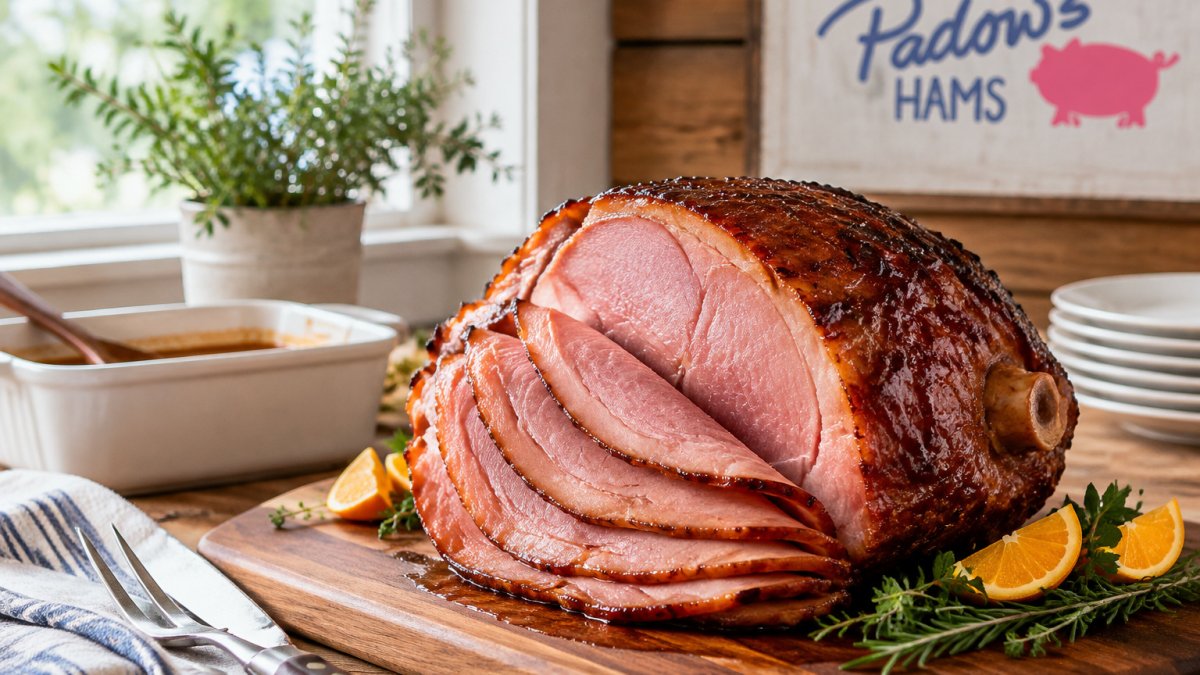
- Pull the ham when the glaze is bubbling and golden. Dark spots mean it is close to burning.
Watch out: Thick, sugary glazes scorch at 400°F if left too long. Set a timer for 10 minutes and check often.
How to Cook a Spiral Ham in a Slow Cooker
A slow cooker is a good choice when your oven is busy. It keeps the ham moist, but it will not brown the outside.
- Place the ham cut-side down in the slow cooker. Trim it to fit if needed.
- Add 1 cup of liquid, such as water, apple juice, or a little broth.
- Cook on low for 4 to 6 hours for a fully cooked ham, or until it reaches 140°F.
- Add glaze in the last 30 minutes if you want a sweet coating. Spoon it over the slices.
- Check the temperature before you serve.
Because the ham does not brown, the glaze step matters more here. A quick run under the broiler for 2 to 3 minutes can add color, but watch it closely.
Fixing Dry, Salty, or Unevenly Heated Ham Slices
Even a good ham can go wrong. Here is how to fix the most common problems.
If the slices are dry:
- Add a few spoonfuls of liquid to the pan and re-cover with foil.
- Warm for 15 to 20 minutes more at 275°F.
- Serve with pan juices spooned over the top.
If the ham tastes too salty:
- Soak the slices briefly in warm water for a few minutes, then pat dry.
- Serve with plain sides like mashed potatoes or green beans to balance the flavor.
- Pair with something sweet, like a fruit chutney.
If one side is hotter than the other:
- Rotate the ham in the pan halfway through heating.
- Check the temperature in several spots, not just one.
- Let the ham rest a few minutes so the heat evens out.
Microwave and small-batch reheating: For a single slice or small portion, warm it in the microwave in 20-second bursts, covered with a damp paper towel. Stop when it is warm, since the meat dries quickly.
Planning Your Holiday Ham: Serving Sizes and Leftovers
Plan about one-half pound of bone-in ham per adult. Spiral hams are often boneless-style for easy slicing, so you may need a little less per person. Add extra if you want good leftovers.
Some planning tips:
- Make ahead: Cook the ham a day early, cool it, slice it, and refrigerate it. Reheat the slices gently with a splash of liquid.
- Store leftovers: Wrap sliced ham tightly and refrigerate promptly after cooking.
- Freeze for later: Wrap portions well and freeze. Use within a couple of months for best quality.
If you want a ham that arrives ready for your table, order from Padow's Hams Co.'s online shop and skip the grocery run. For a local pickup option, arrange pickup in Richmond, VA and avoid waiting on shipping.
Frequently Asked Questions
How long does it take to cook a spiral ham that's already cooked?
A fully cooked spiral ham only needs to be warmed through, not fully cooked again. Plan roughly 10 to 15 minutes per pound at 325°F, covered with foil, until the thickest part reaches 140°F on a food thermometer. Timing varies with the ham's size and shape, so check the temperature rather than relying on the clock alone. Keep the oven low to prevent the outer slices from drying before the center is heated.
Is it better to cook a ham at 325 or 350?
A lower oven temperature of 325°F is usually the better choice for a spiral ham. The slices are already separated, so they dry out quickly at higher heat. Cooking at 325°F takes a bit longer but warms the ham more evenly and keeps the meat tender. If you are short on time, 350°F works, but check the internal temperature earlier and cover the ham tightly with foil.
When should you put glaze on a spiral ham?
Add the glaze during the last 20 to 30 minutes of heating, after the ham has warmed through. Brush it between the slices and over the surface, then uncover the ham so the glaze sets. Applying glaze too early, especially with sugar in it, can cause it to burn before the ham is hot. Brush on a second coat near the end for a glossy finish.
Should you cover a spiral ham while it cooks?
Yes. Cover the ham tightly with aluminum foil for most of the heating time. Covering traps moisture and keeps the slices from drying out. Remove the foil only for the final stretch when you apply the glaze, so the surface can caramelize. This two-stage method, covered first and uncovered last, gives you both moist meat and a finished exterior.
Padow's Hams Co. has been family-owned and operated since 1936. Our hams are cured for three months, and we ship nationwide. Whatever your holiday plans look like, a well-cooked spiral ham makes the table feel like home.