 how-to
7 Steps to Scrub Country Ham Before Cooking
Last Updated: November 7, 2026
Quick Summary
To scrub country ham before cooking, rinse the ham under cool running water, then work a stiff brush in small circles over the entire rind, rinsing the brush often. Scrub dark spots a little longer without tearing the rind, then pat the whole surface dry with a clean towel.
- Wear kitchen gloves and set up a sink or basin of cool water first.
- Scrub gently with steady pressure so you do not cut into the meat or tear off the rind.
- Scrub the shank end, the butt end and the sides so the whole rind is covered.
- Pat the ham completely dry before soaking or cooking.
Table of Contents
- Why Scrubbing a Country Ham Matters Before Cooking
- What You'll Need to Scrub Country Ham
- Step-by-Step: How to Scrub Country Ham Before Cooking
- How to Rinse Country Ham After Scrubbing
- How Long to Soak Country Ham Before Cooking
- How to Boil Country Ham After Scrubbing
- Start Your Holiday Ham Order at Padow's Hams Co.
- Frequently Asked Questions
Why Scrubbing a Country Ham Matters Before Cooking
Scrubbing is the first real job when you start a country ham. A country ham is salt-cured and dry, and its outside rind collects mold, salt crust and dark spots during the curing process. A quick scrub removes that surface buildup so the ham cooks clean and the flavor stays balanced.
Skipping this step can leave the rind gritty and the outside slices tasting harsh.
Padow's Hams Co. hams are cured for three months, and our Virginia distributor follows the Virginia salt cure recipe. The cure is why the rind needs attention before the ham goes into the pot.
What You'll Need to Scrub Country Ham
Gather your supplies before you start. Having everything ready keeps the work quick and clean. See an overview of preparing a country ham, including the steps that come before cooking.
- A large, clean sink or basin deep enough to hold the ham
- A stiff vegetable brush or scrub brush reserved for food use
- Kitchen gloves for hand protection
- Cool running water
- A clean towel for drying
- A sturdy cutting board or clean counter space
- A large stockpot or roasting pan for the cooking step later
Step-by-Step: How to Scrub Country Ham Before Cooking
Follow these steps in order for the cleanest results.
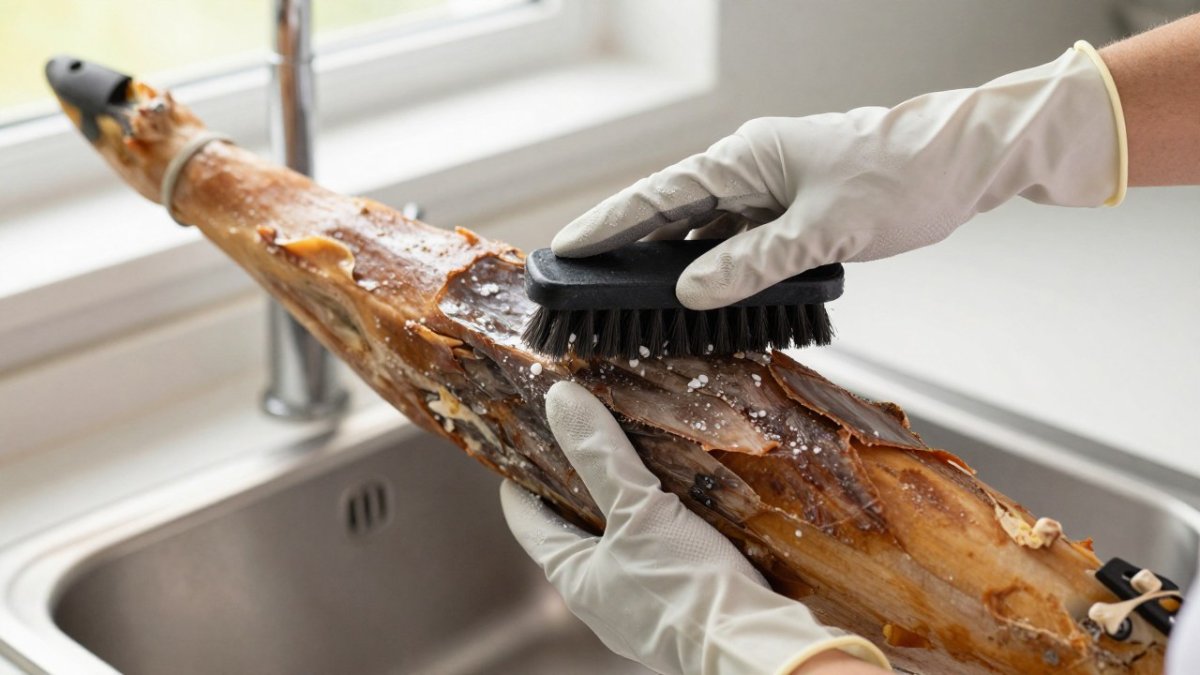
- Set up your workspace. Clear the sink and fill it with cool water. Put on your gloves.
- Inspect the ham. Look over the rind for loose mold, dark spots and any dry, flaky crust.
- Wet the rind. Hold the ham under cool running water to soften the surface.
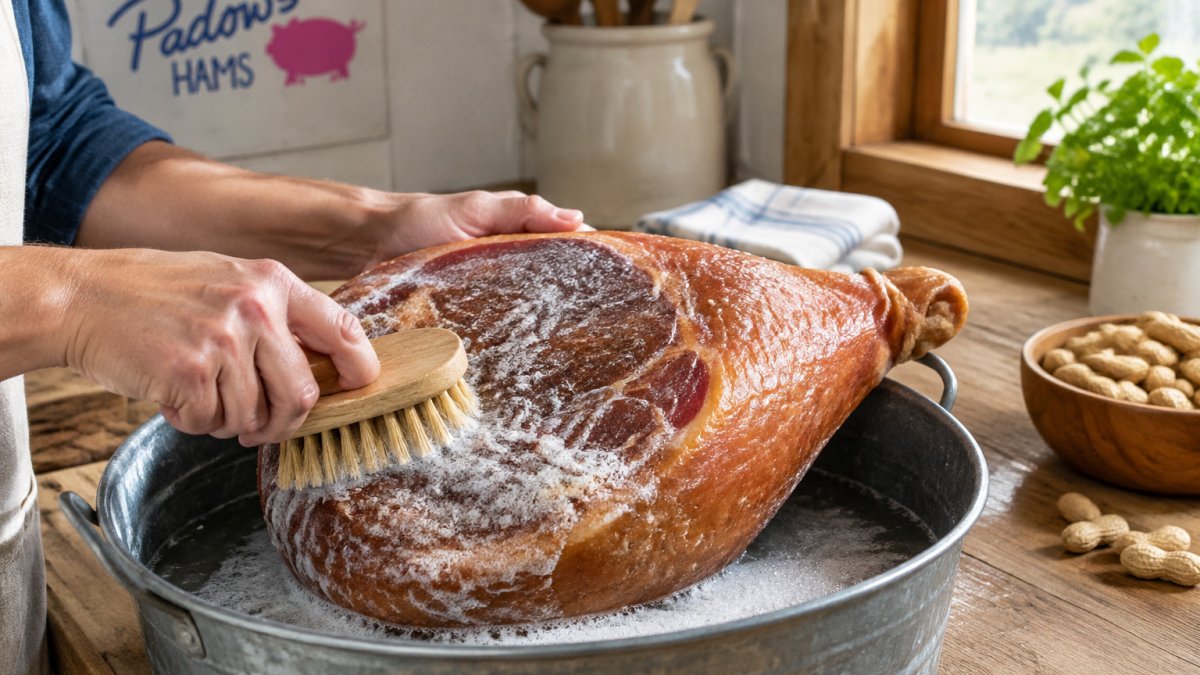
- Scrub gently but firmly. Use the stiff brush in small circles across the entire rind. Work on the shank end, the butt end and the sides.
- Rinse as you go. Rinse the brush often to lift away debris.
- Pay attention to any spots. Scrub dark patches a little longer, but avoid tearing the rind.
- Dry the ham. Pat the entire surface with a clean towel before soaking or cooking.
Watch out: Do not scrub so hard that you cut into the meat or pull off the rind in large pieces. Gentle, steady pressure removes the surface buildup without damaging the ham.
How to Rinse Country Ham After Scrubbing
Once the rind is clean, give the ham a final rinse. Run cool water over every side until the water runs clear and no loose salt or debris remains. A final rinse removes any leftover brush residue and gets the surface ready for the next step.
Dry the ham thoroughly before you move on. Learn how to slice country ham once it is cooked for even, clean pieces. Excess surface water can dilute the seasoning and affect how the ham browns later.
How Long to Soak Country Ham Before Cooking
Soaking affects how salty the finished ham tastes, and the right soak length depends on the ham itself. Use this decision guide before you fill the sink.
When soaking is worth it:
- A whole, bone-in ham that has been cured for several months and has a visible salt crust. These hams carry the most surface salt, and a long soak pulls some of it out.
- A ham you plan to serve sliced and eaten cold, where the cure flavor is front and center.
- Any ham that tasted harsh or aggressively salty the last time you cooked one.
When you can shorten or skip the soak:
- A half ham or boneless ham, which has more cut surface and less rind, so it takes on less salt during the cure.
- A ham you plan to glaze and bake, where sweetness balances the salt.
- A ham from a shorter cure. Padow's Hams Co. hams are cured for three months through our Virginia distributor following the Virginia salt cure recipe. Soak length for any ham should be adjusted after tasting.
Soak timing by ham type:
- Whole bone-in ham: 12 to 24 hours, changing the water every 4 to 6 hours.
- Half ham: 8 to 12 hours, changing the water every 4 hours.
- Boneless ham: 4 to 8 hours, changing the water every 3 to 4 hours.
- Sliced ham: usually no soak. Slices are thin and will turn waterlogged; rinse them and pat dry instead.
Keep the ham in the refrigerator the entire time it soaks. A ham sitting in a cool sink on the counter is a food-safety risk, not a shortcut. Change the water with fresh cool water each time, the water is doing the work of drawing salt out, and stale water stops pulling.
How to tell if you soaked long enough: Cut a thin sliver from the edge, cook it in a skillet, and taste it. If it is still sharply salty, soak another 4 hours. If it tastes balanced, stop, over-soaking can wash out the cure flavor and leave the ham bland and watery. A common pattern is to soak, taste, and adjust rather than to follow a fixed clock.
Watch out: Do not soak a ham at room temperature or leave it in the sink overnight without refrigeration; bacteria grow quickly in the 40°F to 140°F range, and a long soak is exactly the kind of window where that happens.
Soak time depends on the type of ham, and the article gives these guidelines for each.
| Ham type | Soak time | Water change |
|---|---|---|
| Whole bone-in ham | 12 to 24 hours | Every 4 to 6 hours |
| Half ham | 8 to 12 hours | Every 4 hours |
| Boneless ham | 4 to 8 hours | Every 3 to 4 hours |
| Sliced ham | Usually no soak | Rinse and pat dry instead |
Soak time by ham type (hours)
How to Boil Country Ham After Scrubbing
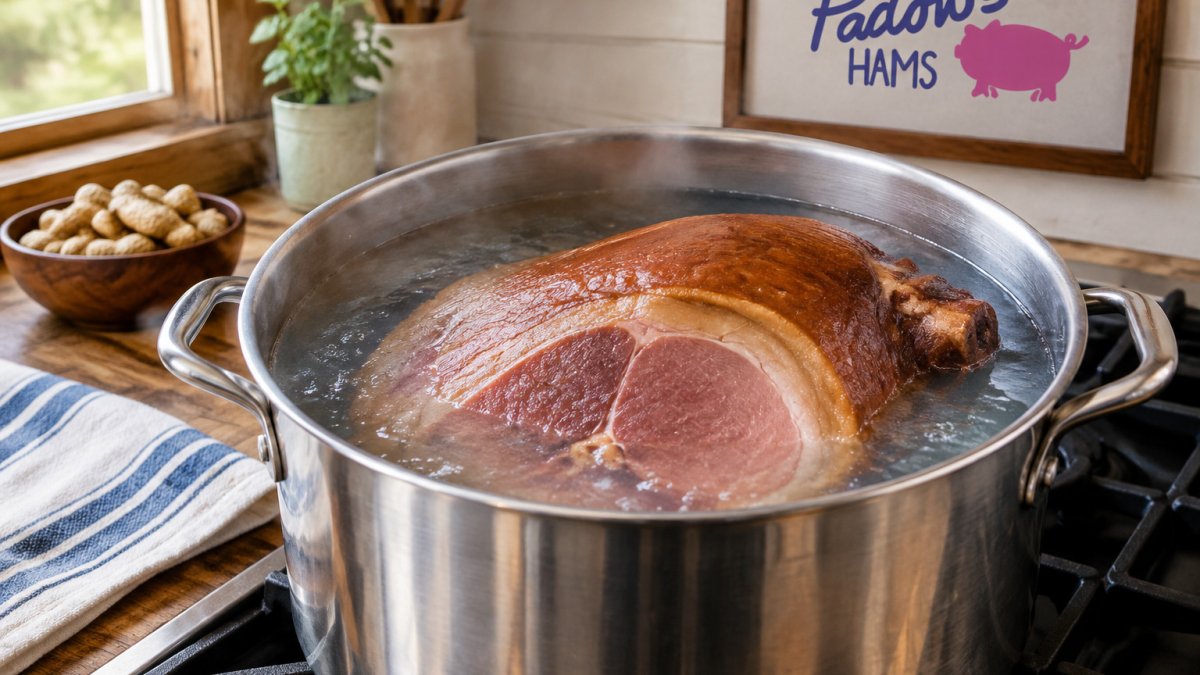
Once the ham is scrubbed, rinsed and soaked, it is ready for the pot. Compare the full cooking method for country ham from start to finish. Despite the common phrasing, you do not actually boil a country ham, you simmer it. A hard rolling boil tightens the muscle fibers and can leave the meat tough and stringy, while a gentle simmer keeps it tender and lets the salt move out of the meat into the water.
Pot and water: Use a stockpot tall enough that the ham is fully submerged with an inch or two of water above it. A whole bone-in ham often needs a 20- to 24-quart pot; a half ham fits in a 12- to 16-quart pot. Place the ham in the pot, cover it with fresh cool water, and set it over medium-high heat until small bubbles break the surface, then turn the heat down so the water stays at a bare simmer, around 180°F to 200°F. You want a few bubbles rising, not a churning surface.
Simmering time by weight: Plan on roughly 20 to 25 minutes per pound at a simmer. A 12- to 14-pound whole ham takes about 4 to 5 hours; a 7-pound half takes about 2.5 to 3 hours. These are guidelines, not guarantees, the ham is done when it reaches temperature, not when the clock runs out.
Checking doneness: Insert an instant-read thermometer into the thickest part of the ham, away from the bone. Country ham is safe to eat when it reaches 145°F and rests for at least 3 minutes, per USDA guidance for whole cuts of pork. Many cooks take it to 160°F for a firmer, more sliceable texture. Check the water level every 30 to 45 minutes and add hot water, not cold, to keep the ham covered; cold water drops the pot temperature and stalls the cook.
Finishing in the oven (optional but traditional): A simmered ham is cooked, but a short bake sets the glaze and browns the surface. Move the ham to a roasting rack in a pan, score the fat in a diamond pattern about 1/4 inch deep, and bake at 325°F for 20 to 30 minutes, brushing with a glaze of brown sugar, mustard, and a splash of cider vinegar halfway through. Pull it when the glaze bubbles and the surface is burnished. If you skip the oven, the ham is still fully cooked and ready to slice.
Common mistakes to avoid:
- Letting the water boil hard, which toughens the meat
- Forgetting to check the water level and letting the ham cook dry
- Guessing at doneness instead of using a thermometer
- Adding cold water to a simmering pot
Cooling and storing: Let the ham rest 20 to 30 minutes before carving so the juices redistribute. Refrigerate leftovers within 2 hours of cooking, in shallow containers so they cool quickly, and use them within 3 to 4 days. Learn how long leftover country ham lasts and how to wrap, freeze and reheat it safely. Reheat leftover slices to 165°F.
Watch out: Do not carve or slice the ham straight from the pot, hot ham shreds and crumbles, and resting it first gives you clean, even slices.
Start Your Holiday Ham Order at Padow's Hams Co.
Scrubbing and cooking a country ham takes time. If you are planning a holiday feast or a thoughtful gift, Padow's Hams Co. offers country hams, Virginia peanuts and gift boxes. Visit padow.com to see current options and pricing.
Frequently Asked Questions
How do you scrub a country ham before cooking?
Start by rinsing the ham under cool running water to loosen surface salt and any mold. Use a stiff, clean brush to scrub the rind and outer surface, working in small circles and paying attention to the shank and joint areas. Rinse again to remove loosened residue, then pat the ham dry with clean towels. Scrubbing removes the dark surface mold that develops during aging, which is normal for a dry-cured ham and does not mean it has spoiled. Once cleaned, the ham is ready for soaking or cooking according to your recipe.
Should you soak country ham after scrubbing it?
Many cooks soak a country ham after scrubbing to reduce surface saltiness, especially with older or more heavily cured hams. Soaking in cool water for several hours or overnight, changing the water once or twice, helps pull out excess salt. Milder, younger hams may need little or no soaking. Taste a small piece of the cooked ham or a thin sliver of the raw ham to judge how salty it is before deciding how long to soak.
Can you cook country ham without soaking it first?
Yes, you can cook country ham without soaking, but the result may be saltier than you prefer, particularly with a long-cured ham. A brief rinse and scrub is still recommended to remove surface mold and salt crystals. If you skip soaking, consider simmering the ham in fresh water rather than a heavily salted liquid, and taste the finished ham before adding any additional salt to a dish or glaze. Padow's Hams Co. hams are cured for 3 months.