 How-to
How to Ship a Country Ham Across the Country Safely
Last Updated: November 14, 2026
Quick Summary
To ship country ham across the country safely, use a new rigid box rated for the ham's weight, cushion it on every side, add a moisture barrier, and include cold packs for longer transit. Ship early in the week on an expedited service with tracking, and refrigerate the ham promptly on arrival.
- Use a new, rigid corrugated box rated for the ham's weight; never reuse a shipped box.
- Wrap the ham in food-safe paper and pad at least two inches on every side.
- Keep the moisture barrier separate from cushioning to prevent surface mold.
- Ship Monday or Tuesday to avoid weekend delays and choose an expedited tracked service.
- Refrigerate the ham promptly after delivery and keep it wrapped to limit air exposure.
Table of Contents
- What Makes a Country Ham Different to Ship
- How to Ship Cured Meat Safely: Packing Materials and Temperature Control
- Whole Country Ham Shipped vs. Sliced: Which Works Better for Transit
- Choosing a Carrier and Planning the Shipping Timeline
- Does Country Ham Need Refrigeration in Transit?
- Country Ham Shipping and Storage After Delivery
- How Long Does Country Ham Last Once It Arrives?
- Ordering Your Padow's Ham for Delivery Across the Country
- Frequently Asked Questions
What Makes a Country Ham Different to Ship
At Padow's Hams Co., we have been shipping country hams since 1936, and a country ham is not a typical grocery item. A country ham is a whole, salt-cured leg of pork. Our hams are cured for three months before they are ready. That long curing process is what gives it its firm texture, deep flavor and long keeping quality.
Shipping a country ham across the country takes some planning. The ham is heavy, it arrives whole or in large pieces, and the packaging matters as much as the product inside it.
The steps below cover how to pack, ship, store and cook a country ham so it arrives safely and tastes the way it should.
How to Ship Cured Meat Safely: Packing Materials and Temperature Control
Good packing protects the ham from bumps, moisture and temperature swings, and the right materials depend on how many days the package will be in transit. Build the shipment from the outside in.
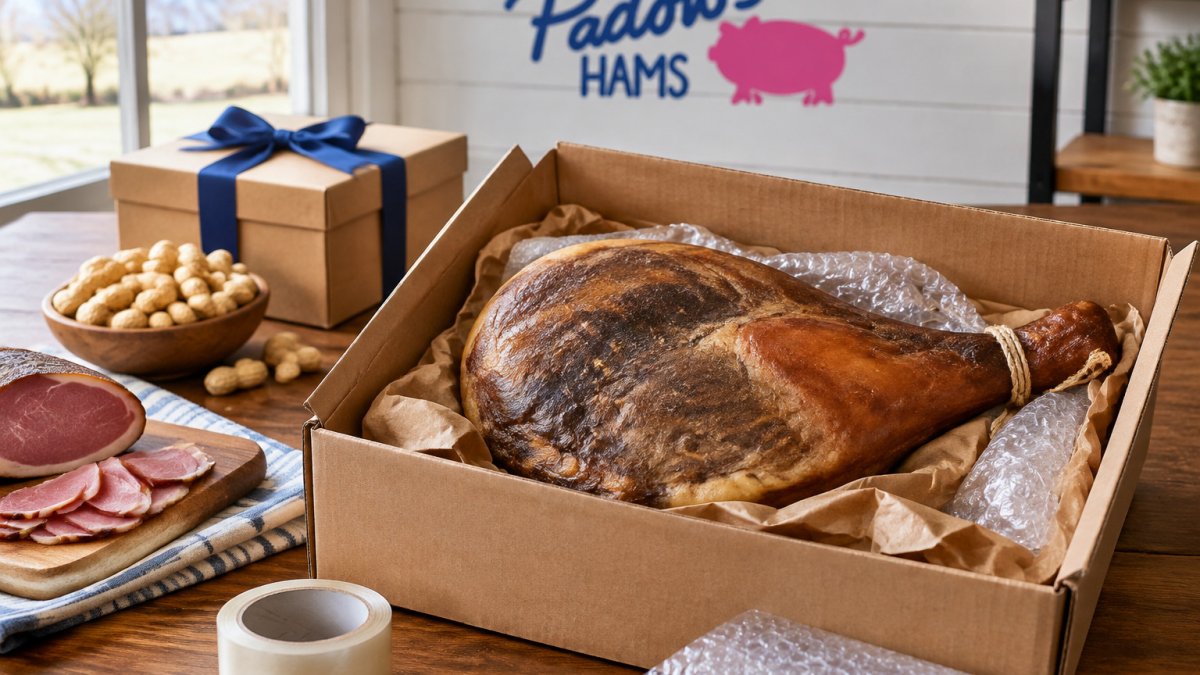
Outer box. Use a new, rigid corrugated box rated for the ham's weight. A whole country ham is heavy and dense, so a box that is merely large enough is not enough; the walls need to resist crushing when the package is stacked. Never reuse a box that has been shipped before, because its walls have already lost strength.
Cushioning. Wrap the ham in food-safe paper first, then add at least two inches of padding on every side so the ham cannot shift. Foam-in-place, bubble wrap or crumpled kraft paper all work; the test is that the ham does not move when you shake the closed box.
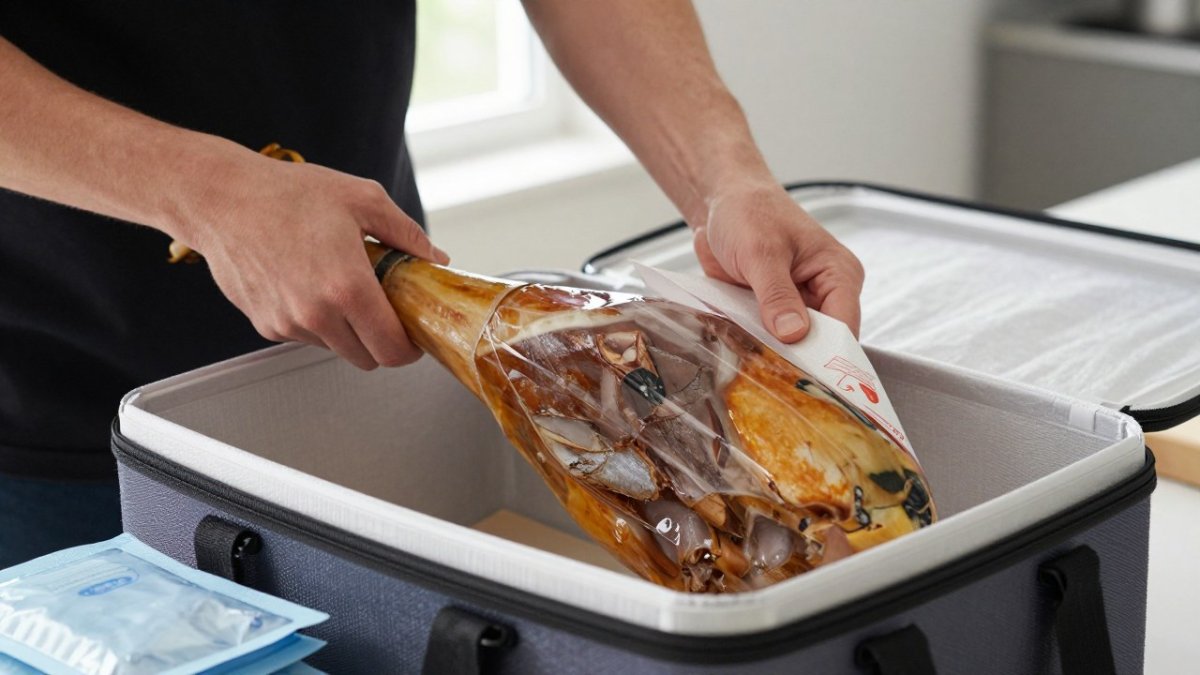
Moisture barrier. Line the inside of the box with a plastic bag or sheet, and seal cold packs in their own bags. A country ham is salt-cured and its surface can weep, and trapped moisture is what encourages surface mold. Keep the ham itself wrapped so it never sits directly against melting cold packs.
Insulation and cold packs. For warm-weather shipments or transit longer than two days, use an insulated liner and enough cold packs to hold the interior cool for the full transit window, not just the first day. In cool months and short transit, insulation alone is often sufficient for a cured ham.
Labeling. Mark the box clearly as containing food, put the recipient's phone number on the outside, and include a packing slip inside. A label that says the contents are perishable and should be opened on arrival helps the recipient act quickly.
Watch out: a box that is packed tight but not sealed against moisture can arrive with a damp, mold-flecked surface even when the ham itself is fine, so treat the moisture barrier as a separate step from the cushioning.
Whole Country Ham Shipped vs. Sliced: Which Works Better for Transit
A whole country ham keeps better in transit than sliced ham. The intact skin and bone protect the meat, and the ham has fewer exposed surfaces for air and moisture to reach. Sliced ham has more exposed surface area, so it needs tighter packaging and shorter transit times.
For most long-distance orders, a whole or large-piece ham is the simpler choice. Sliced ham works well when you want portions ready to serve, but plan for a shorter shelf life once it is opened and cut.
Choosing a Carrier and Planning the Shipping Timeline
The carrier decision comes down to three things: how fast the service is, whether it delivers on Saturday, and whether the package is guaranteed against delay. Most shippers sending a cured ham choose an expedited service with tracking rather than the slowest ground option, because every extra day is another day of temperature exposure.
Service levels to compare. Postal and private carriers both offer a range. The practical split is between a two-to-three-day expedited service and an overnight or next-day service. For a cured ham in cool weather, the expedited tier is usually enough. In hot weather or for a sliced product, the faster tier is the safer choice.
Cutoff days. Ship early in the week, ideally Monday or Tuesday, so the package moves through the network before the weekend. A package dropped off on a Friday can sit in a facility until Monday, which adds two days the tracking estimate may not show. Confirm the carrier's cutoff time for the day, because a late drop-off counts as the next day.
Weekends and holidays. Saturday delivery is not standard on every service, and federal holidays pause pickup and delivery. Build those days into your plan rather than assuming the quoted transit time covers them. Around late fall and December, volume rises sharply and delays become more common, so add a buffer day and order earlier than you think you need to.
Tracking and delay response. Keep the tracking number and share it with the recipient so someone is there to bring the box inside. If a package stalls, contact the carrier with the tracking number right away rather than waiting for it to move on its own.
Check the shipping and return policy before you order. Our Shipping and return policy explains the options available for your order.
For practical packing steps, see our guide on how to ship perishable gourmet food safely. Our gift-ready options for corporate and holiday recipients may also suit a shipment across the country.
Shipping Seasons and Delay Planning
Shipping volume rises sharply in late fall and December, and delays become more common during those weeks. Order early, allow extra days for transit, and confirm the delivery address before the ham leaves. If a package is delayed, contact the carrier with the tracking number right away.
USPS Priority Mail shipping guidance
Does Country Ham Need Refrigeration in Transit?
A country ham is cured, which makes it more stable than fresh meat, but it still benefits from cool conditions during transit. Keep the package cool for as long as possible, especially in warm weather, and ask the recipient to refrigerate or store the ham promptly on arrival.
If the ham will sit outdoors or in a hot vehicle, the cold packs and insulated box become especially important. Shorter transit times reduce the risk of temperature problems, so choose the fastest reliable option you can afford.
Country Ham Shipping and Storage After Delivery
Once the ham arrives, open the box and check the packaging. If anything looks damaged or wet, contact the seller before you store the ham. Keep the ham refrigerated until you are ready to cook or serve it.
For a whole ham, wrap any exposed areas tightly and store it in the refrigerator or a cool, dry place as directed on the packaging. Our step-by-step guide to cooking a country ham covers preparation once it is time to serve.
How Long Does Country Ham Last Once It Arrives?
A cured country ham keeps for a long time when it is stored properly. Refrigerate the ham promptly after delivery and keep it wrapped to limit air exposure. Once a ham is cooked or sliced, it has a shorter shelf life, so store leftovers in airtight containers and refrigerate them promptly.
Check the storage guidance on your product label for the most accurate timing. For slicing tips once you are ready to serve, read our guide to the best ways to slice country ham.
Ordering Your Padow's Ham for Delivery Across the Country
Ordering from Padow's Hams Co. is straightforward. Choose your ham, select your shipping option, and place the order early enough to allow for transit, especially during the holidays. We ship nationwide.
Pricing depends on the size of the ham, the shipping option and the order date, so check our website for current prices and delivery options. We also offer Virginia Peanuts and gift boxes, which make thoughtful additions to any order.
USPS Priority Mail shipping guidance
Ready to send a country ham across the country? Order from Padow's Hams Co. today and plan delivery ahead of your event.
Frequently Asked Questions
Can country ham be shipped across the country?
Yes. Padow's Hams Co. ships nationwide, so a country ham can be sent to most U.S. addresses. Shipping costs, delivery times, and carrier options depend on the destination, the weight of the order, and the time of year. Check current shipping details on the Padow's Hams Co. website or contact the team for a quote before you order, especially for holiday deliveries when carriers are busiest.
Does country ham need refrigeration during shipping?
Whole country hams are cured and are more stable than fresh meat, but they should still travel cold. Ask whether your order ships with insulated packaging and cold packs, and choose the fastest service you can to reduce time in transit. Once the box arrives, open it promptly and store the ham as directed on the packaging.
How long does country ham last after it arrives?
Shelf life depends on whether the ham is whole or sliced, how it is stored, and whether it has been opened. A whole country ham kept cool and dry can last for an extended period, while sliced portions should be refrigerated and used sooner. Store the ham in a cool place, wrap cut surfaces tightly, and follow any storage guidance included with your order.
Should country ham be shipped whole or sliced?
Whole hams travel well because the bone and the intact surface help them keep their structure and moisture in transit. Sliced ham is more exposed to air and handling, so it has less margin for error during delivery. For most buyers sending a gift or a holiday centerpiece across the country, a whole ham is the more reliable choice.