 how-to
7 Steps to Ship Perishable Gourmet Food Safely
Last Updated: November 1, 2026
Quick Summary
Shipping perishable food safely means building a pack-out with a rigid outer box, insulation, and a moisture barrier, then matching gel packs or dry ice to the product. Keep chilled food at 32°F to 40°F and frozen food at 0°F or colder, and always choose the fastest tracked delivery window.
- Line the cooler with a sealed plastic bag before adding ice to prevent leaks.
- Gel packs suit refrigerated shipments, while dry ice lasts longer for frozen food.
- Chill food thoroughly before packing so it does not melt your ice from inside.
- Ship early in the week so boxes do not sit in a warehouse over the weekend.
- Add a thermometer to a sample pack-out and check the reading at delivery.
Table of Contents
- Step 1: Choose the Right Perishable Food Packaging
- Step 2: Master Shipping Food With Ice Packs
- Step 3: Know How Long Perishable Food Can Stay in Transit
- Step 4: Follow Perishable Food Shipping Guidelines for Safe Temperatures
- Step 5: Prepare and Seal Your Food Before Packing
- Step 6: Select a Carrier and Reduce Transit Time
- Step 7: Test Your Pack-Out and Handle Delivery Failures
- Ordering Perishable Gifts From Padow's Hams Co.
- Frequently Asked Questions
Step 1: Choose the Right Perishable Food Packaging
Shipping perishable gourmet food safely starts with the box, not the food. Get the container wrong and no amount of ice will save the shipment. The lessons below hold for any temperature-sensitive gift.
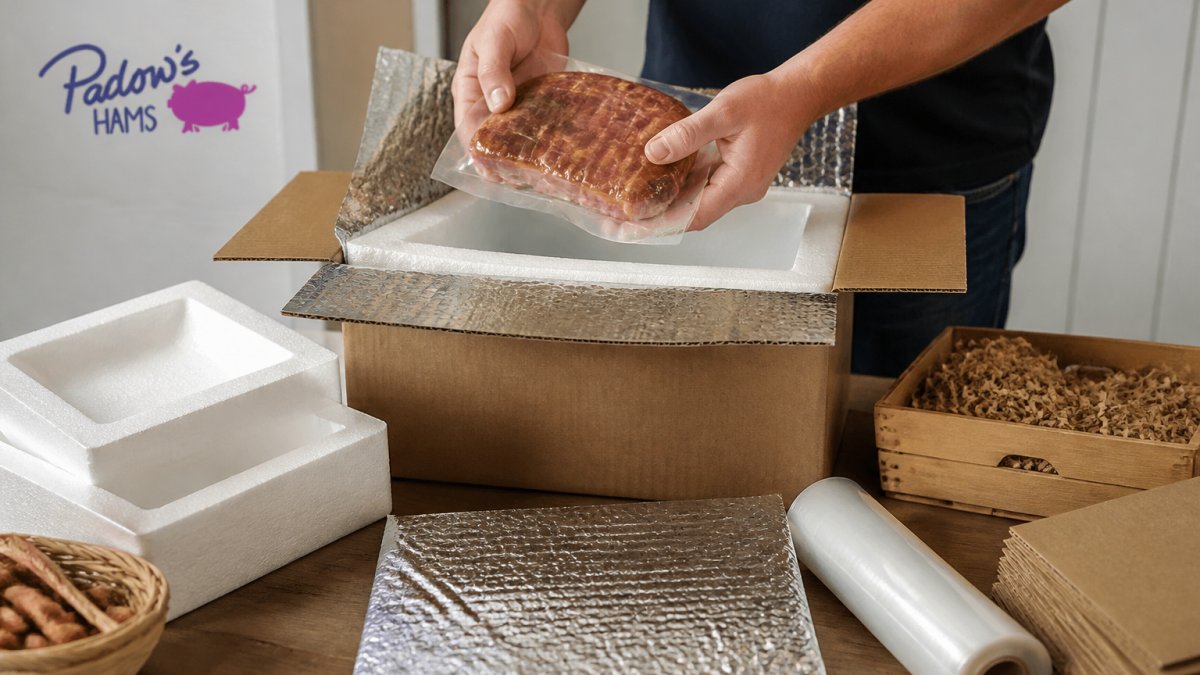
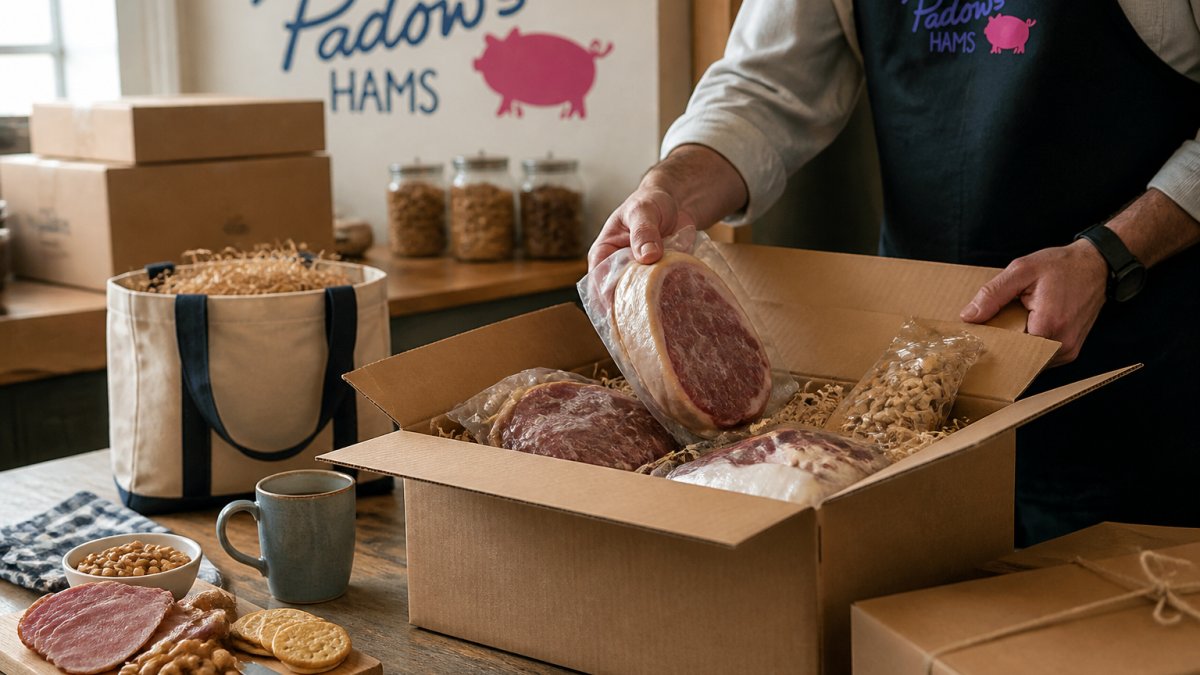
Perishable food packaging is the combination of an outer box, insulation, and a moisture barrier that holds a safe temperature from your door to theirs. Three layers do the real work:
- A rigid outer box that keeps its shape when stacked
- Insulation that slows heat transfer
- A liner that keeps meltwater away from the food
Skip any one of these and the whole pack-out fails.
Insulated Containers and Foam Inserts
Insulation is what buys you time. A plain cardboard box offers almost none. Foam inserts, molded liners, and corrugated coolers each slow the outside air from reaching your food.
Molded foam gives the best performance for the price. It fits the box snugly, so there are no air gaps for heat to sneak through.
Match the insulation to the trip. A short regional run needs less than a cross-country one. When in doubt, go thicker.
Moisture Barriers and Leak Prevention
Condensation is the quiet killer of perishable goods. Ice melts, water pools, and cardboard turns to mush. A moisture barrier keeps that water away from both the food and the box.
Line the cooler with a sealed plastic bag before you add ice. Wrap the food itself in a leak-proof layer. Then seal the whole pack-out so nothing can slosh in transit.
Watch out: skipping the barrier is the mistake we see most. A soaked box arrives soft and sagging, and the carrier may refuse it or the food may spoil. Two minutes with a plastic liner prevents both.
Pack Each Gourmet Product to Its Own Rules
Broad perishable advice treats every item the same, but a wheel of cheese and a box of chocolates have different needs. Match the pack-out to the product:
Size the Insulation and Refrigerant to the Load
A common mistake is guessing at insulation and ice. A better approach is to work backward from the trip: estimate transit time, check the forecast at both ends, then choose an insulation thickness and refrigerant amount that hold your target temperature for that window plus a buffer. A small, dense load holds cold longer than a large, airy one, so pack items tightly and fill empty space with padding rather than leaving air gaps.
Label the Box as Perishable
A clear "Perishable, Keep Refrigerated" or "Perishable, Keep Frozen" label tells handlers and the recipient what they are dealing with. Add orientation arrows and a "This Side Up" mark for liquids. Labeling does not replace good packaging, but it reduces the chance of a box being left in a hot vestibule or stacked upside down.
Step 2: Master Shipping Food With Ice Packs
Shipping food with ice packs comes down to one choice: gel packs or dry ice. Each works, but they suit different shipments. Pick the wrong one and your food arrives warm or frozen solid when it should be neither. Temperature control becomes even more critical when shipping delicate treats that require a precise balance of cooling to maintain their texture and appearance.
Gel packs release cold slowly and are simpler to handle. Dry ice is colder and lasts longer, but it needs ventilation and special labeling.
Gel Packs vs. Dry Ice
Use this quick reference to decide:
| Refrigerant | Best For | Lasts | Handling |
|---|---|---|---|
| Gel packs | Refrigerated shipments, short trips | Shorter | Simple, no special label |
| Dry ice | Frozen shipments, long trips | Longer | Needs venting and labeling |
Gel packs keep food cool without freezing it. That suits cured meats, cheeses, and most gourmet gifts. Dry ice pushes temperatures far below freezing and works for frozen food crossing long distances.
A common mistake is overfilling with refrigerant. Too much dry ice can freeze food that should stay merely chilled. Match the refrigerant to the product, not to your worry level.
Step 3: Know How Long Perishable Food Can Stay in Transit
How long can perishable food stay in transit? It depends on your insulation, your refrigerant, and the weather. There is no single number, but the rule is simple: shorter is always safer. Plan every shipment around the fastest realistic delivery window.
Summer heat and winter cold both shorten the safe window. A box that holds for three days in mild weather may hold for far less in a heat wave.
Track every shipment. A delivery delay you catch early is a problem you can fix. A delay you discover after the food spoils is a refund and a lost customer.
Step 4: Follow Perishable Food Shipping Guidelines for Safe Temperatures
Perishable food shipping guidelines exist for one reason: bacteria grow fast in the temperature danger zone, and the only defense is keeping food out of it from your door to theirs. The exact targets depend on the product, but the ranges below are the practical ones to design a pack-out around.
| Product state | Target holding temperature | Notes |
|---|---|---|
| Chilled (cured meats, cheese, many gift boxes) | 32°F to 40°F | Cold but not frozen; gel packs are the right tool |
| Frozen (frozen entrees, ice cream, frozen seafood) | 0°F or colder | Dry ice or a heavy gel-pack load; verify with a thermometer |
| Hot (cooked foods shipped hot) | 135°F or above | Requires an insulated hot bag or heated pack, not ice |
The danger zone is roughly 40°F to 140°F, and the longer food sits in it, the faster spoilage bacteria multiply. A box that leaves your door at 38°F but warms to 55°F in a hot truck has already spent hours in the danger zone.
Monitor, Don't Guess
A pack-out you have not measured is a pack-out you do not know. Put a cheap refrigerator thermometer or a data logger in one test box and check it at delivery. If the reading is above 40°F for chilled food, add insulation or refrigerant before you ship another order. Repeat the test in summer and winter, because ambient temperature changes the result.
Handle on Arrival
Tell the recipient what to do the moment the box lands. A printed card that says "refrigerate immediately" or "freeze on arrival" does more for food safety than any single piece of packaging. For chilled items, advise moving them to the refrigerator within a couple of hours of delivery. For frozen items, advise the freezer, not the fridge.
When in Doubt, Keep It Colder
If you are choosing between a gel pack and dry ice for a borderline product, choose the colder option and add a buffer. A slightly over-chilled cheese or cured meat recovers in the fridge; a warm one does not. The USDA food safety guidance on keeping food at safe temperatures is the reference we point customers to when they ask how cold is cold enough, and the FDA guidance on refrigerated food storage covers cold-holding specifics for retail and home settings.
Step 5: Prepare and Seal Your Food Before Packing
Preparation decides how well food survives the trip. Chill everything thoroughly before it goes in the box. Warm food melts your ice from the inside and cuts your safe window short.
- Chill food in the fridge before packing
- Wrap items tightly to block air and moisture
- Seal liquids in their own leak-proof bag
- Keep raw and ready-to-eat items separate
- Label each item with handling notes
Seal the inner layers, then seal the outer box. Tape every seam. A box that pops open in transit loses its cold air fast, and the food pays for it.
Step 6: Select a Carrier and Reduce Transit Time
Carrier choice is a temperature decision. Faster delivery windows keep perishables in the cold chain for less time, while slower ground service suits only short distances and mild weather.
Choose a carrier that offers shipment tracking and a clear delivery window.
Weather conditions can override any plan. Check the forecast at both ends of the route. If a heat wave or a storm is coming, ship earlier or hold the order.
Step 7: Test Your Pack-Out and Handle Delivery Failures
Test before you trust. Build one sample pack-out, add a thermometer, and check the temperature over time. A simple packaging test tells you whether your insulation and refrigerant actually hold up. Adjust the layers until they do.
Delivery failures happen. A missed drop-off, a damaged box, or a late truck can ruin perishable goods. Have a plan:
- Monitor tracking daily during transit
- Contact the recipient the day before delivery
- Keep a replacement or refund policy ready
- Offer pickup when shipping is risky
Ordering Perishable Gifts From Padow's Hams Co.
Padow's Hams Co. has offered authentic Virginia country hams and Southern specialties since 1936.
Ready to send something special? Browse our gift boxes for a complete gourmet gift, or add Virginia Peanuts for a shelf-stable treat that ships easily. Have a question about timing or delivery? Contact us and we will help you plan the shipment.
For food-safety specifics on cold holding, the FDA guidance on refrigerated food storage is a reliable reference to check before you pack.
Shipping perishable gourmet food safely takes the right box, the right refrigerant, and a fast, well-tracked delivery. Get those three right and your gift arrives as fresh as it left.
At Padow's Hams Co., we take that worry off your plate. Our nationwide shipping and time-honored curing bring Southern tradition to your table.
Frequently Asked Questions
How do you safely ship perishable gourmet food?
Safely shipping perishable food requires a system: use an insulated container with a foam insert, add enough refrigerant (gel packs or dry ice) to hold a safe temperature for the entire transit time, seal the food in leak-proof packaging, and choose a fast carrier service. Always test your pack-out before a large shipment and include a perishable label with handling instructions.
How long can perishable food stay in transit?
Most perishable food can stay in transit for 24 to 48 hours if packed correctly with sufficient refrigerant. Overnight or next-day delivery is the safest choice for items that must stay refrigerated. For frozen shipments using dry ice, transit can extend to 48-72 hours depending on the amount of dry ice and insulation. Always check the carrier's delivery window and avoid shipping late in the week when a delay could leave the package sitting in a warehouse over the weekend.
What should you do if a perishable food shipment is delayed?
If a perishable shipment is delayed, contact the carrier immediately to get a new delivery estimate and request priority handling. Notify the recipient so they can watch for the package and refrigerate it as soon as it arrives. When the package does arrive, check the internal temperature with a thermometer: refrigerated food should be below 40°F and frozen food should still be solid. If the food is above 40°F for more than two hours, discard it for safety.
Should perishable food be shipped overnight?
Overnight shipping is the safest option for most perishable gourmet food because it minimizes the time the food spends outside controlled refrigeration. Next-day delivery reduces the risk of spoilage from weather conditions or carrier delays. For frozen items packed with dry ice, a two-day service can work if you use enough refrigerant and test the pack-out. When in doubt, choose the fastest service your budget allows and always ship early in the week.