 How-to
How Long to Soak Country Ham for a Mild Flavor
Last Updated: November 15, 2026
Quick Summary
To soak country ham for a mild flavor, soak slices for 1 to 6 hours in cold water, tasting every 30 minutes after the first hour. Whole hams need 12 to 48 hours in the refrigerator, with the water changed every 6 to 12 hours.
- Thin slices under 1/4 inch need 1 to 2 hours of soaking.
- Thick slices of 1/4 to 1/2 inch need 2 to 4 hours.
- Very salty or aged slices can soak up to 6 hours, with a water change halfway through.
- Always soak in cold water in the refrigerator, never on the counter at room temperature.
- Taste the ham to decide when to stop, since the clock is less reliable than flavor.
Table of Contents
- Why Soaking Country Ham Makes It Milder
- How Long to Soak Country Ham Slices
- How Much Salt Is Removed by Soaking Ham
- Soaking a Whole Ham Versus Slices
- Soaking Safely: Water, Temperature and Water Changes
- How to Cook a Salt Cured Ham After Soaking
- How to Cook Country Ham Slices Once They Are Soaked
- Frequently Asked Questions
Why Soaking Country Ham Makes It Milder
Country ham is salt-cured, and that salt is the reason it keeps for months without refrigeration. It is also the reason many people find it too salty for their taste. Soaking pulls some of that excess salt out of the meat before you cook it, which is why many people choose to soak country ham before serving.
Padow's Hams Co. hams are cured for 3 months. That curing process is what gives the ham its deep, full flavor. Soaking doesn't change that flavor. It simply tames the saltiness so the ham is easier to enjoy at the table.
Salt moves from the meat into the water over time. Cold water helps this happen slowly and evenly. The result is a ham that tastes richer and more balanced, not just less salty.
How Long to Soak Country Ham Slices
Slices soak much faster than a whole ham because they have more surface area and less thickness. For most cooks, a few hours is enough to notice a difference, but the right number depends on thickness, age, and how salty the ham tastes to begin with. Our guide on choosing the best liquid for soaking explains how the soaking water itself affects the final flavor.
Use this as a starting point, then taste:
- Thin slices (under 1/4 inch): 1 to 2 hours
- Thick slices (1/4 to 1/2 inch): 2 to 4 hours
- Very salty or aged slices: Up to 6 hours, with a water change halfway through
A common pattern among home cooks is to start at the low end, taste, and add time in 30-minute increments. That beats guessing a single number, because two hams of the same thickness can differ in saltiness depending on how long they were cured and how they were stored.
Start checking the flavor after the first hour. Pull out a small piece, rinse it, and taste it. If it still tastes too salty, keep soaking. If it tastes mild and balanced, stop. The ham will not get milder in the center just because the surface has been in water longer, so tasting is more reliable than the clock.
Watch out: Soaking too long can make thin slices soft and watery, and it can pull flavor as well as salt. Check them often rather than leaving them overnight.
If you are working with a whole ham instead of slices, the timings are much longer. See the comparison below before you commit to a soak.
How Much Salt Is Removed by Soaking Ham
Soaking removes salt from the outer layers of the meat first, so the surface becomes milder faster than the center. Longer soaks reach deeper, but the gains slow down over time.
Most of the salt you will taste comes out during the first several hours. After that, you get smaller changes with each extra hour. This is why a water change often helps more than adding time to a single soak.
Because the amount of salt removed depends on the ham's age, thickness, and how salty it was to begin with, there is no exact number to promise. Taste is the most reliable guide.
Soaking a Whole Ham Versus Slices
A whole country ham needs far more time than slices. Its thickness means salt takes longer to move out of the center, so a whole ham may soak for a day or more, depending on its size and how salty you want it. Once the ham has soaked to the mildness you want, you can balance its saltiness with a gentler smoke, a consideration also associated with Outdoor Power & Grill.
Here is how the two compare:
| Factor | Slices | Whole Ham |
|---|---|---|
| Typical soak time | 1 to 6 hours | 12 to 48 hours |
| Water changes | Once, if needed | Every 6 to 12 hours |
| Best container | Large bowl or pan | Clean food-safe tub or bucket |
| Main concern | Over-soaking | Keeping the ham cold |
For a whole ham, plan ahead. Many home cooks soak one overnight and change the water in the morning. Check the flavor before you decide whether to soak longer.
Soaking Safely: Water, Temperature and Water Changes
Cold water is the safest choice, and temperature control is the part most home cooks get wrong during long soaks. Keep the ham in the refrigerator while it soaks, and use water that is cold to the touch. A common target is refrigerator temperature, around 40°F or below, which slows bacterial growth while the salt moves out of the meat.
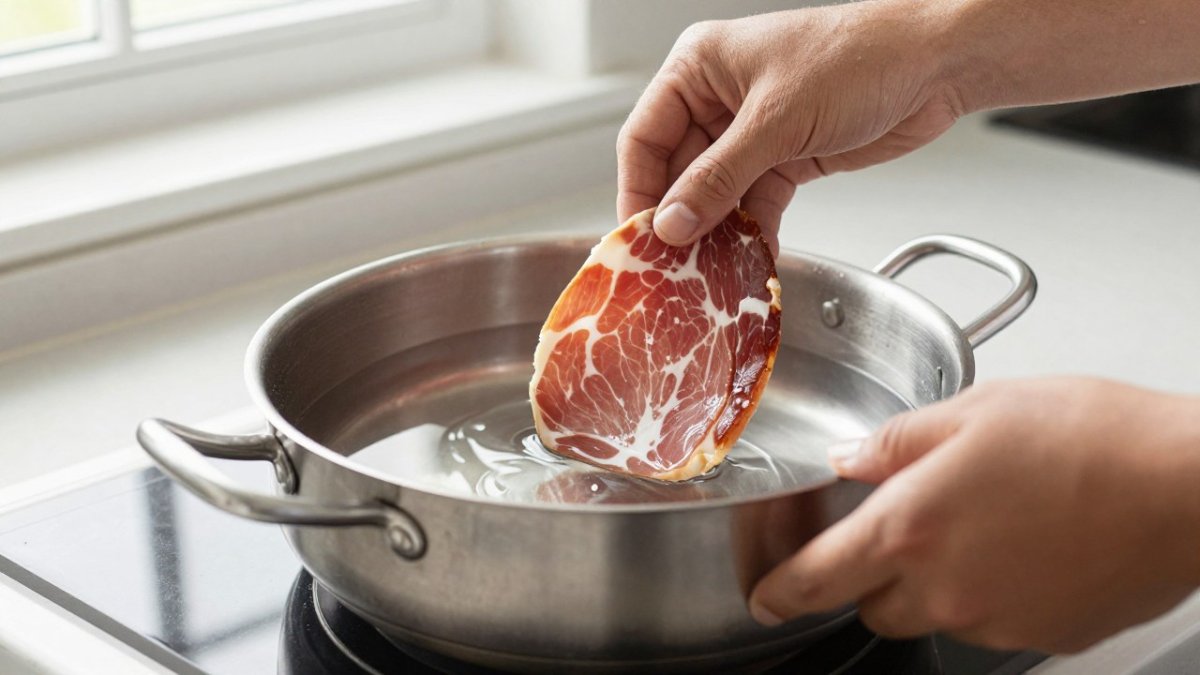
A simple routine works well:
- Use cold, clean tap water
- Place the ham in a food-safe container and cover it fully
- Keep the container in the refrigerator during the soak
- Change the water every 6 to 12 hours for long soaks
- Discard soaking water after use, never reuse it
For a whole ham, a clean food-safe tub or bucket that fits on a refrigerator shelf is easier to manage than a pot. If the ham will not fit in the refrigerator, a cooler packed with ice can work, but check the ice every few hours and keep the water cold. Do not rely on a cool room or a garage in warm weather.
Watch out: Do not leave a ham soaking on the counter at room temperature. Warm conditions allow bacteria to grow, and a long soak at room temperature is the most common safety mistake with this method.
Before soaking, rinse the outside of the ham and scrub off any surface mold with a stiff brush and warm water. Then rinse again. Once you have finished soaking, you can move on to cooking. Our guide on how to scrub country ham before cooking walks through cleaning the surface before the ham goes into water.
How to Cook a Salt Cured Ham After Soaking
After soaking, the ham is ready to cook. Many home cooks choose to bake or simmer a whole ham, while slices are usually fried or baked.
For a whole ham, you can:
- Simmer: Place the ham in a large pot, cover with fresh water, and simmer gently until the center is hot and tender.
- Bake: Wrap the ham loosely in foil and bake at a low oven temperature until it is heated through.
Use a food thermometer and cook to a safe internal temperature. The ham should be hot all the way through before serving.
If you need full cooking instructions for a whole country ham after soaking, see our guide on how to cook a country ham.
For a deeper look at how cured and uncured hams differ, and why the salt level depends on the curing method, read cured vs. uncured ham: what's the difference.
How to Cook Country Ham Slices Once They Are Soaked
Once your slices have soaked to the right flavor, pat them dry with a clean towel. Dry slices brown better in the pan.
Heat a skillet over medium heat and fry the slices for a few minutes per side, until they are lightly browned around the edges. Many cooks add a splash of water or coffee to the pan and let it reduce for a rich red-eye gravy.
Skillet timing depends on thickness, so watch the color rather than the clock. For a full step-by-step skillet method with cooking times and common mistakes, see our skillet guide to cooking country ham slices.
Serve the slices warm with biscuits, grits, or eggs. For a classic pairing, add a bowl of Virginia peanuts on the side for a salty, crunchy contrast.
Frequently Asked Questions
How long should you soak a country ham before cooking?
Soaking time depends on the ham's size, age and how salty you want the result. A whole ham often needs 12 to 24 hours in cold water, with the water changed every few hours, while thin slices usually need only 30 minutes to 2 hours. For a milder result, soak longer and change the water more often, then taste a small piece before cooking the rest. Keep the ham refrigerated during the soak so it stays safe to eat.
Does soaking ham in water remove salt?
Yes. Salt moves out of the ham into the water over time, which is why soaking is the standard way to reduce saltiness in a country ham. Fresh cold water pulls more salt out than water that has already absorbed some, so changing the water matters. Soaking does not remove every trace of salt, so tasting a sample before you cook the whole ham is a good habit.
Can you soak country ham slices instead of a whole ham?
You can, and slices need far less time than a whole ham. Thin slices often do well with 30 minutes to 2 hours in cold water, changed once or twice. Thicker slices take longer. Check the flavor by tasting a small piece, and keep the slices covered and refrigerated while they soak so they stay safe until cooking.
How do you cook country ham after soaking it?
After soaking, rinse the ham, pat it dry and cook it using your preferred method. Common options are simmering in water, baking in a covered roasting pan or frying slices in a skillet. Cook slices over medium heat until they are heated through and lightly browned at the edges. Serve while warm for the best flavor and texture.