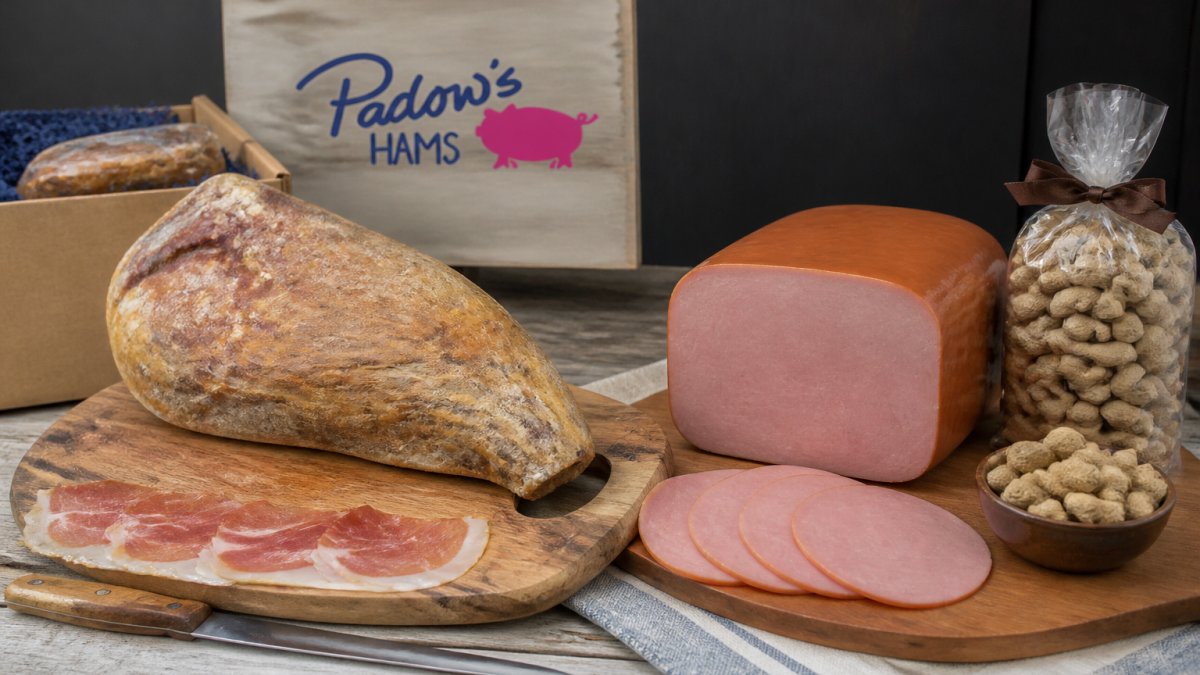
 comparison
Country Ham vs City Ham: Key Differences Explained
Table of Contents
- Country Ham vs City Ham: A Side-by-Side Comparison
- How Country Ham Is Cured
- How City Ham Is Cured
- Flavor, Texture, and Salt: What to Expect on the Plate
- Country Ham Soaking and Preparation
- How to Cook Country Ham
- How to Cook City Ham
- Conclusion
- Frequently Asked Questions
Last Updated: October 17, 2026
Country Ham vs City Ham: A Side-by-Side Comparison
The difference between country ham and city ham comes down to how the pork is cured. Country ham is dry-cured with salt and aged for months, producing a firm, salty, intensely savory meat. City ham is wet-cured in brine, often smoked, and sold fully cooked and ready to heat. That single fork in the road, dry versus wet, explains nearly every difference in flavor, texture, and preparation that follows.
At Padow's Hams Co., we have shipped traditional Virginia country hams since 1936, so we have watched home cooks puzzle over this exact question for decades. Here is the short version: country ham is an ingredient you prepare, city ham is a centerpiece you warm.

| Feature | Country Ham | City Ham |
|---|---|---|
| Curing method | Dry-cured with salt | Wet-cured in brine |
| Curing time | Months | Days to a few weeks |
| Moisture | Low, firm, dry | High, moist, tender |
| Salt level | High | Moderate |
| Texture | Dense, chewy, flaky when sliced thin | Soft, springy |
| Flavor | Salty, smoky, deeply savory | Mild, hammy, lightly smoked |
| Ready to eat | No, must be cooked | Yes, sold fully cooked |
| Common uses | Biscuits, breakfast, holiday boards | Holiday dinner, sandwiches, casseroles |
How Country Ham Is Cured
Country ham is made by packing the pork leg in salt and letting time do the work. The salt draws moisture out of the meat, which slows microbial growth and concentrates flavor. Many producers add sugar and spices to the cure, and some hams are smoked afterward.
The process is slow by design. Our hams are cured for three months, and the Virginia salt cure recipe behind them comes from our distributor in Virginia, who handles the curing itself. That aging window is what builds the dense texture and deep, salty character country ham is known for. There is no brine tank and no shortcut. The USDA food safety guidance on cured meats is a useful reference for understanding why salt and time work together as a preservation method.
How City Ham Is Cured
City ham is submerged in a saltwater brine, often with sugar and curing salts, then smoked and cooked. Because the meat sits in liquid rather than being packed in dry salt, it absorbs moisture instead of losing it. The result is a plumper, juicier ham with a milder flavor.
The brine itself is a controlled solution. Producers pump or immerse the leg so the salt, sugar, and curing salts (typically sodium nitrite or a nitrate blend) distribute evenly through the meat. That even distribution is why city ham tastes uniformly seasoned rather than salty at the surface and bland at the bone. After brining, most city hams are smoked at a low temperature and then fully cooked before packaging.
Read the label before you buy
The label tells you more about a city ham than the word "ham" does. A few terms are worth knowing:
- "Ham, water added" means the brine was injected and the product contains added water, which is why it can shrink noticeably in the oven and taste softer than a dry-cured ham.
- "Ham and water product" signals a higher percentage of added water and a milder, wetter result.
- "Fully cooked" or "ready to eat" means the ham has already reached a safe internal temperature and only needs reheating.
- "Heat and serve" is the same promise in different words.
- "Smoked" describes flavor treatment, not cooking status, so a smoked ham can still be uncooked.
That last point trips people up. Smoking and cooking are separate steps, and a label that says "smoked" does not guarantee the ham is safe to eat cold. Check for "fully cooked" or "ready to eat" specifically.
Why the water matters
Many city hams carry added water, which is why they can shrink noticeably in the oven and why the meat tastes softer and less concentrated than a dry-cured ham. If you want a firmer slice, look for a ham with a lower added-water claim on the label. If you want convenience and a mild flavor that takes a glaze well, the added water is not a problem, it is the point.
Flavor, Texture, and Salt: What to Expect on the Plate
Country ham tastes salty, smoky, and deeply savory, with a flavor that lingers. City ham tastes mild and gently smoky, closer to what most people picture when they hear the word ham.
Texture follows the moisture. Country ham is firm and dense, and it flakes slightly when sliced thin. City ham is soft and springy, easy to cube and layer into casseroles. If you are coming from supermarket ham, expect country ham to feel like a different food entirely, not a saltier version of the same thing.
Salt is where the two diverge most. Country ham carries a high salt level because salt is the preservative, and that is why soaking and preparation matter so much. City ham is seasoned rather than preserved, so it needs no soaking at all. For anyone watching sodium, a city ham is the gentler choice, while country ham is best treated as a flavoring as much as a protein.
Country Ham Soaking and Preparation
Country ham soaking and preparation is the step that separates a good result from a great one. Soak the ham in cold water, refrigerated, and change the water periodically to pull excess salt out of the meat. The exact timing depends on the size of the cut and how salty it is, so taste a small piece as you go rather than trusting a fixed clock.
Here is how we would approach it:
- Rinse the ham under cold running water to remove surface salt
- Place it in a large pot or clean bucket and cover fully with cold water
- Refrigerate and change the water every few hours
- Slice a small piece and cook it to test the salt level
- Continue soaking if it still tastes too salty
- Pat dry before cooking
For a whole ham, plan on a long soak. For thin slices or small cuts, the process moves much faster. If you are not sure how salty your particular ham will be, ask the supplier, since cure strength varies between producers.
How to Cook Country Ham
How to cook country ham depends on the cut, but the goal is always the same: cook it gently and do not dry it out further. Thin breakfast slices need only a quick sear in a skillet, a minute or two per side, until the edges crisp. They are done fast.
For a whole or half ham, baking at a low temperature works well. Many cooks add liquid to the pan and cover it to keep the meat from toughening. Some glaze near the end of cooking, though a traditional country ham often needs nothing but butter and a hot pan.
Doneness and food safety
Country ham is a raw, cured product, so it still needs to reach a safe internal temperature. The USDA safe minimum cooking temperatures chart lists 145°F for whole cuts of pork with a three-minute rest, and that is the number to aim for on a whole or half ham. Thin slices cooked in a skillet reach that temperature almost immediately, which is why they need only a minute or two per side.
Use an instant-read thermometer inserted into the thickest part, away from bone and fat. Color is not a reliable doneness cue for cured meat, and the pink tint that curing salts create can make an undercooked ham look done.
Timing by cut
- Thin breakfast slices: 1 to 2 minutes per side in a dry skillet over medium heat, until the edges crisp.
- Thick slices or steaks: sear on both sides, then finish in a 325°F oven until the center reaches 145°F.
- Whole or half ham: bake covered at 325°F, allowing roughly 15 to 20 minutes per pound as a starting point, then check with a thermometer rather than trusting the clock.
Practical notes
- Fry thin slices in a dry skillet; the ham has enough fat and salt of its own
- Simmer thicker cuts in water before baking if they still taste salty
- Let a baked ham rest before carving so the slices hold together
- Serve leftovers cold on biscuits, where country ham genuinely shines
- Refrigerate leftovers within two hours of cooking and use them within three to four days
Country ham is best cooked like bacon and treated like a seasoning. Small quantities, high heat, and a little fat go a long way, and a thermometer settles the doneness question faster than any visual cue.
How to Cook City Ham
How to cook city ham is mostly a matter of reheating, since it arrives fully cooked. A gentle oven reheat at a low temperature brings it up to serving temperature without drying it out. Glazes, brown sugar, mustard, and cloves are traditional and work well because the mild meat takes on sweetness nicely.
Watch the internal temperature rather than the clock. The USDA safe minimum cooking temperatures chart is the reference we point people to for reheating cooked ham safely. Covering the pan during the first part of reheating helps retain moisture, then uncover near the end if you want a caramelized glaze.
One caution: city ham is already salty from the brine, so taste your glaze before adding more salt. Most glazed ham recipes are sweet for exactly this reason.
Conclusion
Choosing between country ham and city ham is really a choice about how much work you want on your hands. City ham is the easy path, mild and forgiving and ready in under an hour. Country ham asks for a soak and some attention, and it pays you back with a flavor no supermarket ham can match.
That depth is what we have built our business on at Padow's Hams Co. Our Virginia country hams are cured for three months, shipped nationwide, and paired with Virginia peanuts and gift boxes for anyone building a holiday table or a corporate gift list. If you want the real thing this season, browse our country hams and see what three months of patience tastes like.
Frequently Asked Questions
Does country ham taste saltier than city ham?
Yes. Country ham is dry-cured with salt, so it carries a distinctly saltier, more intense flavor than city ham. City ham is wet-cured in brine, which dilutes the salt and leaves a milder taste. If you are sensitive to salt, soak country ham slices before cooking or pair them with something starchy like biscuits or grits to balance the bite.
Does country ham need to be soaked before cooking?
Often, yes. Soaking country ham in water for several hours or overnight pulls out excess surface salt and makes the meat easier to eat. The exact soak time depends on the cut and how salty it is. Thin slices may need only a short rinse, while a whole ham benefits from a longer soak. Always pat the ham dry before cooking so it sears or bakes properly.
Can I use city ham in a recipe that calls for country ham?
You can, but expect a milder result. City ham is wet-cured and fully cooked, so it brings less salt and less intensity than country ham. If a recipe relies on country ham for a salty punch, you may want to add a little extra seasoning or choose a thicker cut of city ham. For dishes where ham is the star, the swap will change the flavor noticeably.
Is country ham ready to eat straight from the package?
Not usually. Most country ham is sold uncooked and needs to be prepared before eating. Some thin slices are labeled ready to eat, but you should always check the packaging. City ham is typically fully cooked and can be served cold or warmed through. When in doubt, follow the label instructions or cook the ham to be safe.