 listicle
Best Alternatives to Honey Baked Hams for Holiday Dinner
Table of Contents
- Why Look Beyond Honey Baked Ham
- Country Ham vs. Honey Ham: What Sets Them Apart
- Spiral-Cut Ham Options at Major Retailers
- Bone-In vs. Boneless Ham: Which Works Best
- Premium Mail-Order Ham Alternatives
- How to Serve Country Ham at Your Holiday Dinner
- Choosing Ham for Holiday Dinner: A Practical Guide
- Conclusion
- Frequently Asked Questions
Last Updated: October 18, 2026
Why Look Beyond Honey Baked Ham
"Honey Baked Ham" has become almost synonymous with the holiday centerpiece, but a whole world of ham options deserves consideration, some deliver similar flavor at different price points, others bring distinct regional traditions and curing methods to the table.
The real question is whether they match what you're looking for: convenience, authentic regional flavor, or a ham that serves a crowd without the premium markup. At Padow's Hams Co., we've been crafting Virginia country hams since 1936, and we've watched holiday hosts split between spiral-cut convenience and the deeper flavor that comes from proper curing and aging.
This guide covers the alternatives to Honey Baked Hams that actually compete on flavor, tradition, or value, what sets them apart, how to weigh bone-in versus boneless, and how to serve whatever you choose.
Country Ham vs. Honey Ham: What Sets Them Apart
The difference between country ham and honey ham goes deeper than glaze. These are fundamentally different products shaped by different curing traditions.
Country ham follows a salt-curing process dating back centuries: the ham is rubbed with salt and spices, then hung to cure for months, drawing out moisture and concentrating flavor into a denser texture with pronounced, savory depth.
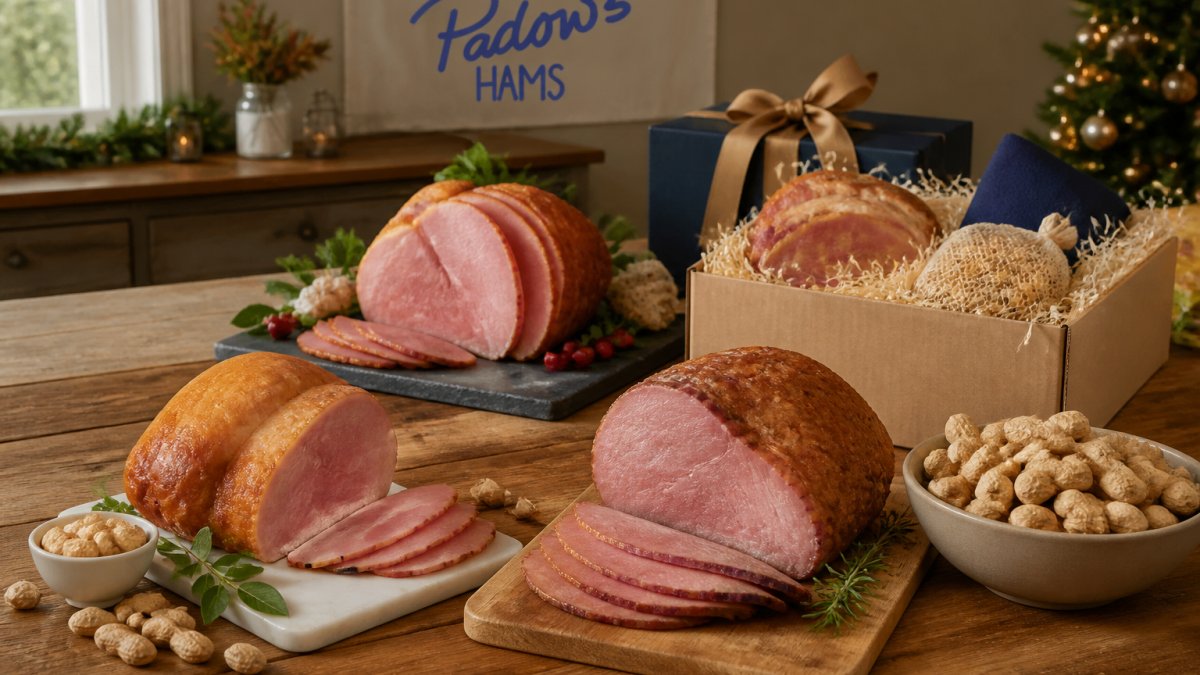
Honey ham, by contrast, is typically a city ham (cured with a gentler salt process) glazed with honey and brown sugar. The glaze caramelizes during cooking, creating sweetness on the surface while the meat stays mild and tender.
The choice isn't about which is "better", it's about what your table needs. Country ham suits a traditional Southern holiday where bold flavors are expected; honey ham works for mixed crowds.
Spiral-Cut Ham Options at Major Retailers
If you want spiral-cut convenience without the specialty-brand markup, grocery stores and warehouse clubs stock solid options. The trick is knowing what you're buying: most retail spiral hams are city hams (brined rather than dry-cured), pre-sliced, and sold with a separate glaze packet, designed for oven reheating, not the low-and-slow cooking a country ham requires.
What to check on the label before you buy:
- Cure type. "City ham" or "brined" means a milder, wetter product. "Dry-cured" or "country-cured" means a denser, saltier ham that needs different handling. Most spiral-cut retail hams are city hams.
- Sizing math. Retail spiral hams are usually sold in half-ham (bone-in) or boneless form. As a rule of thumb, plan on 3/4 to 1 pound per person for a bone-in ham and 1/2 to 3/4 pound per person for boneless, since bone weight doesn't feed anyone. A 7- to 9-pound half ham typically serves 12 to 16 people with leftovers.
- Glaze packet. Separate glaze packets let you control sweetness or skip it entirely. If you want the ham's natural flavor to lead, glaze only half the ham and compare.
- Reheating instructions. Most retail spiral hams are fully cooked and only need warming to an internal temperature of about 140°F. Overheating dries them out; a low oven (around 275°F to 325°F) with a foil tent is the common approach.
Warehouse clubs. Membership warehouses carry spiral-sliced hams seasonally, typically in the weeks around major holidays. Availability varies by location and season, so call ahead. The appeal is straightforward: pre-sliced, ready to heat, and priced for feeding a crowd.
Supermarkets. Regional and national grocery chains stock spiral-sliced hams in their meat cases, often with a butcher on hand. You can inspect the ham in person, confirm the cure type and weight, and take it home the same day, no shipping risk, no thawing surprises, which matters for last-minute planning.
The limitation to know. Retail spiral hams are city hams, not country hams, mild, sweet-leaning, and designed for broad appeal. If you want regional character or deeper flavor complexity, they won't deliver it. But for feeding a crowd without fuss, they work reliably.
A note on country ham. If your holiday table leans toward traditional Southern flavor, a salt-cured country ham is a different category entirely. Padow's Hams Co. sources hams that follow the Virginia salt-cure recipe and are cured for three months, producing the denser texture and savory depth retail spiral hams don't aim for. We ship nationwide.
Bone-In vs. Boneless Ham: Which Works Best
This choice affects both cooking and presentation, so think it through before you buy.
Bone-in hams look impressive on the table. The bone creates a natural handle for carving, and there's something ceremonial about presenting a ham still attached to its frame.
The trade-off is weight and space: a bone-in ham takes up more oven and table room, and you're paying for inedible bone weight, so actual meat yield is lower than the label suggests.
Boneless hams offer pure convenience: they fit smaller ovens, slice easily with a regular knife, and maximize the meat you actually eat.
For alternatives to Honey Baked Hams, most store-bought spiral-cut options are boneless. If you want bone-in, specialty mail-order sources or local butchers who still sell traditional hams are your best bet.
Premium Mail-Order Ham Alternatives
Beyond the grocery store, mail-order ham sources deliver regional specialties directly to your door. These hams are cured longer, often using traditional methods, and ship nationwide, and the buying criteria differ from a retail spiral ham.
What separates a premium mail-order ham from a retail one:
- Cure length and method. Traditional country hams are dry-cured with salt and often aged for months. That draws out moisture, concentrates flavor, and creates a denser texture. A three-month cure is a common benchmark for Virginia-style country ham.
- Format. Country hams are typically sold whole or as halves, bone-in, and are not spiral-sliced. You slice them yourself, usually thin, and serve them warm or at room temperature.
- Cooking approach. Country ham is already fully cured, so you're not cooking it from raw. The goal is to gently warm it and manage the salt. Many cooks soak slices briefly in water before warming them in a dry skillet.
- Ordering timeline. Mail-order hams require planning. Order weeks in advance of a holiday, not the day before. Shipping windows tighten around Thanksgiving and Christmas, so build in a buffer.
Padow's Hams Co. brings Virginia country ham tradition to your holiday table. Our hams follow the Virginia salt-cure recipe and are cured for three months to develop deep, complex flavor. We've been doing this since 1936, prioritizing authentic taste over convenience shortcuts.
How to compare mail-order options fairly. Rather than relying on taste descriptions alone, line up the same criteria across candidates:
| Criterion | What to ask |
|---|---|
| Cure method | Dry-cured (country) or brined (city)? |
| Cure length | How many months? |
| Format | Whole, half, bone-in, boneless, sliced? |
| Serving estimate | How many people does the size feed? |
| Cooking method | Bake, simmer, or warm in a skillet? |
| Shipping window | How far ahead must you order? |
| Storage | Refrigerated or shelf-stable before opening? |
That side-by-side view beats a roundup of taste impressions: a ham cured longer and sold bone-in behaves differently in your kitchen than a boneless city ham.
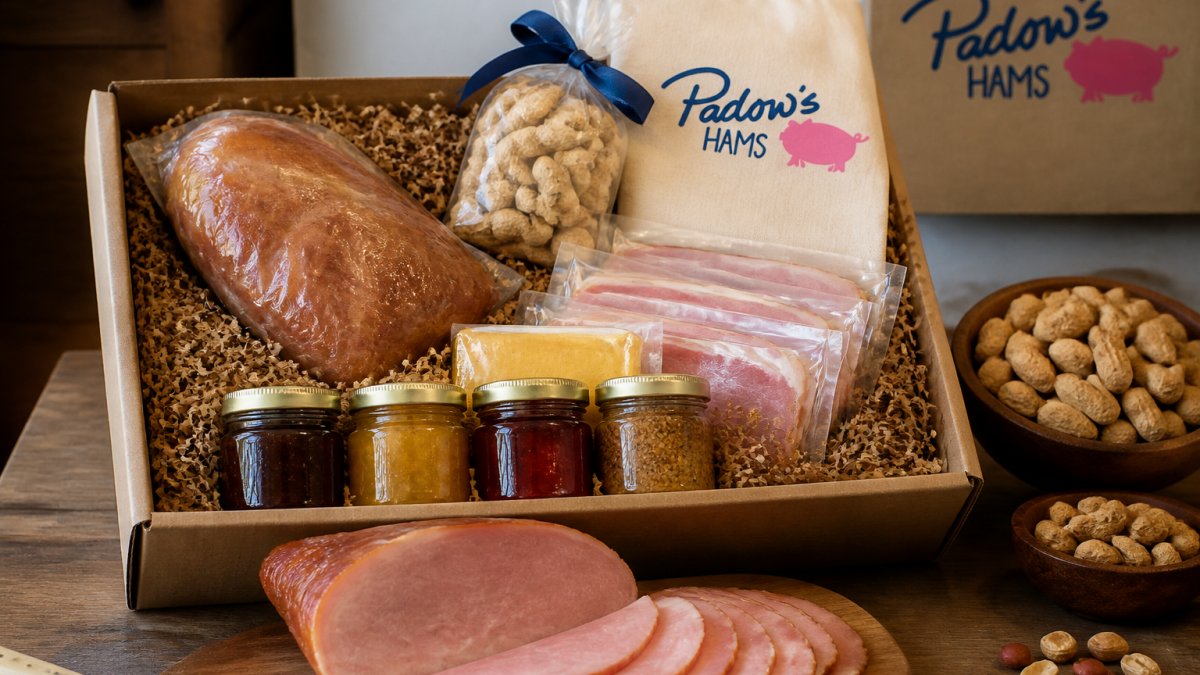
Pairing and gifting. Country ham pairs well with biscuits, mustard, and simple sides that don't compete with its flavor. If you're putting together a host gift or holiday package, Padow's Hams Co. also offers Virginia peanuts and gift boxes, which make thoughtful additions alongside a ham.
How to Serve Country Ham at Your Holiday Dinner
Country ham demands different treatment than the spiral-cut honey ham most people know. Here's how to make it shine.
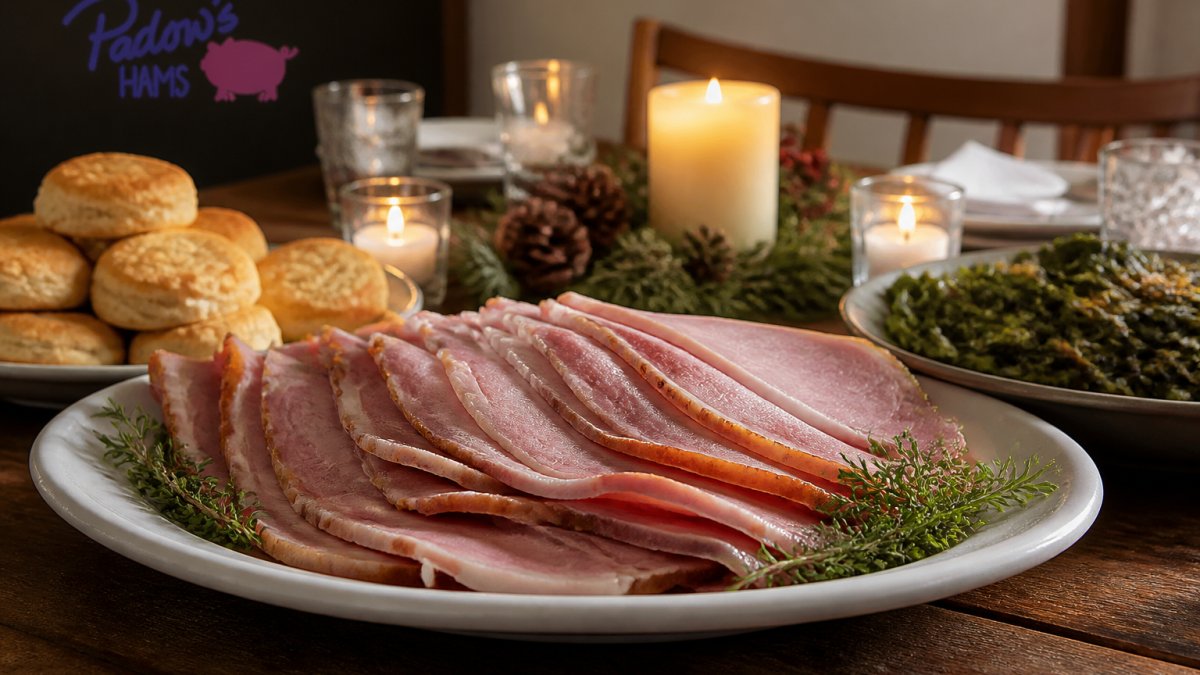
Preparation: Country ham is already fully cured, so you're not cooking it from raw, the goal is to gently warm it and manage the salt.
Cooking: Heat a cast iron skillet over medium-low heat and lay slices in the dry pan without oil, they'll release their own fat as they warm.
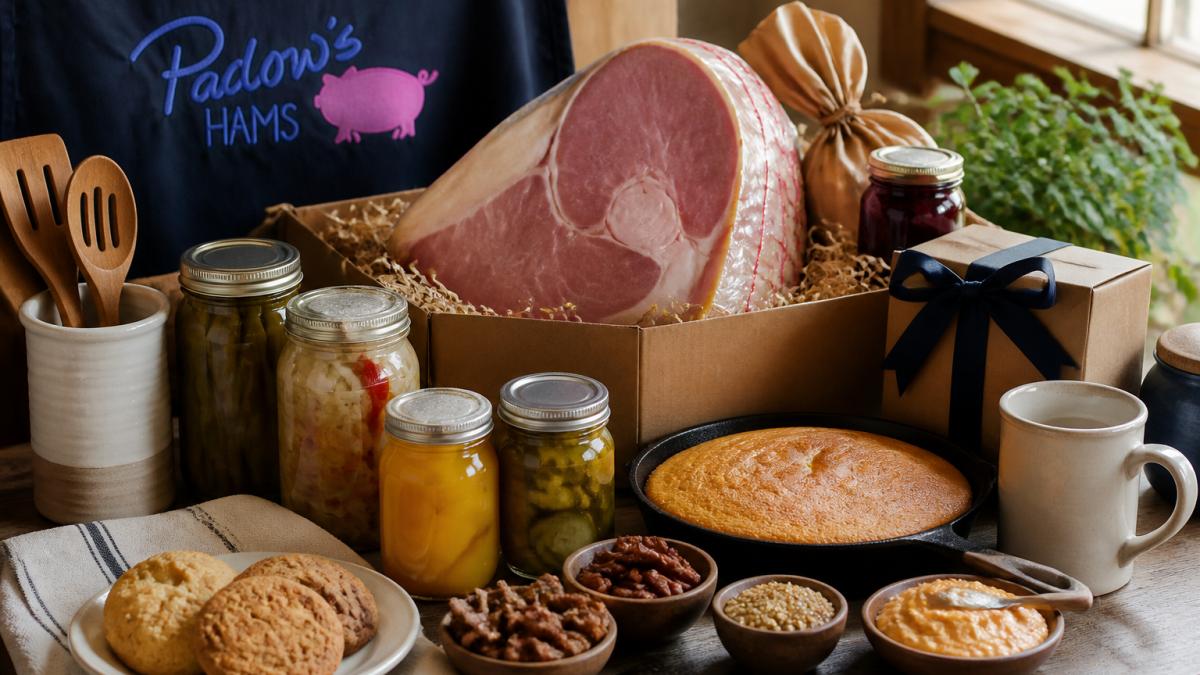
Serving: Arrange slices on a platter while still warm. Country ham pairs beautifully with hot biscuits, butter, and mustard.
Quantity: Country ham is rich and flavorful, so people eat less by weight than they would honey ham.
This approach works for any country ham following traditional curing methods. The key is respecting the product's intensity and letting that flavor lead.
Choosing Ham for Holiday Dinner: A Practical Guide
| Factor | Spiral-Cut Honey Ham | Country Ham | Best For |
|---|---|---|---|
| Flavor profile | Mild, sweet, approachable | Bold, savory, complex | Depends on your crowd's preferences |
| Cooking method | Bake in oven | Gently warm in skillet | Country ham requires more attention |
| Preparation time | 15-20 minutes | 30-45 minutes | Honey ham if you're short on time |
| Serving style | Self-serve slices | Plated by host | Honey ham for casual buffet |
| Shelf stability | Milder, more forgiving | Requires proper storage | Country ham needs cool conditions |
| Regional tradition | Generic American | Southern heritage | Country ham if tradition matters |
| Cost | Budget to moderate | Premium | Budget-conscious: spiral-cut; willing to invest: country ham |
The decision tree is straightforward. If your guests include people unfamiliar with country ham, or you're feeding a large mixed group, spiral-cut honey ham reduces risk, everyone knows what to expect, and it requires minimal cooking skill.
Timing matters too: grocery-store spiral-cut hams let you shop the week of the holiday, while mail-order country hams require ordering weeks ahead.
Consider your oven space. A bone-in ham takes real estate. If your oven is already packed with sides, a boneless ham or country ham (which you warm on the stovetop) solves the problem.
Think about your guests' palates: adventurous eaters curious about regional specialties, or fans of familiar, approachable flavors? That answer often determines whether you go traditional or convenient.
Conclusion
The alternatives to Honey Baked Hams range from grocery-store spiral-cut options that prioritize convenience to mail-order country hams that deliver authentic regional flavor. Your choice depends on what your holiday dinner needs: broad appeal or memorable taste, last-minute shopping or planned tradition.
If you're drawn to authentic Virginia country ham tradition, Padow's Hams Co. brings that heritage to your table with three months of careful curing and over 85 years of family craftsmanship. We ship nationwide. Explore our Virginia country hams and gourmet Southern specialties, including Virginia peanuts and gift boxes for hosts and gift-givers alike. Shop Now
Frequently Asked Questions
How does country ham differ from honey-glazed ham?
Country ham is salt-cured and aged for months, developing a concentrated, savory flavor with a firm texture. Honey-glazed ham is typically brined, smoked, and finished with a sweet coating. Country ham requires slicing thin and often soaking before serving, while honey-glazed ham comes ready to heat. The taste profiles are distinctly different, country ham offers deep, complex saltiness; honey-glazed provides sweetness and moisture.
What's the difference between bone-in and boneless ham for holiday dinner?
Bone-in ham adds flavor during cooking and carving drama at the table, though it yields less meat per pound. Boneless ham is more convenient to slice and serve, with higher meat-to-weight ratio. Bone-in typically costs less per pound but requires more carving skill. Choose bone-in for traditional presentation and flavor; boneless for ease and portion predictability.
How do you serve country ham at a holiday meal?
Slice country ham paper-thin against the grain. Soak slices in water for 30 minutes to reduce saltiness if desired. Serve at room temperature or warm gently in a low oven. Pair with biscuits, cornbread, or crackers. Country ham is often served as part of a charcuterie board or as an appetizer rather than the main entrée, since its intense flavor goes a long way.
What are the best alternatives to Honey Baked Hams available now?
Spiral-cut hams from grocery stores and warehouse clubs offer convenience and value. Mail-order Virginia country hams deliver authentic cured flavor and regional tradition. Bone-in hams from local butchers give you control over glaze and preparation. Each alternative suits different occasions, retail spiral hams for speed, country ham for tradition, mail-order premium options for special occasions.
Should I buy ham from a grocery store or order online?
Grocery store hams offer immediate availability and lower commitment. Online ordering lets you source specialty hams with specific curing methods and flavor profiles, plus nationwide delivery for gifts or distant celebrations. Grocery hams work well for casual meals; mail-order options suit formal dinners, corporate gifts, and when you want regional authenticity or specific quality standards.