 listicle
Authentic Southern Food Gift Baskets: 2026 Guide
Table of Contents
- What Makes Southern Food Gift Baskets Authentic
- How to Compare Southern Food Gift Boxes Before You Buy
- Virginia Country Ham Gifts: The Centerpiece of a Southern Table
- Virginia Peanut Gifts: The Sweet and Salty Southern Staple
- Corporate Food Gift Boxes That Clients Actually Remember
- Regional Variety Within Southern Food Gift Baskets
- Frequently Asked Questions
Last Updated: October 9, 2026
What Makes Southern Food Gift Baskets Authentic
Authentic southern food gift baskets are curated assortments built around the region's signature cured meats, preserves, nuts, and baked goods, chosen for how they were made rather than how they look on arrival.
A basket earns the label when its contents trace to real Southern food traditions: salt-cured ham aged for months, not weeks; peanuts grown and boiled in the region; preserves put up in small batches.
USDA food safety and storage guidance
Three markers separate an authentic basket from a generic one:
- Curing time. Country ham is salt-cured and aged, which builds the deep, savory flavor people associate with the region.
- Regional sourcing. Peanuts, pecans, grits, and preserves should come from Southern growers and makers.
- Balance. A strong basket pairs sweet and savory: ham or sausage alongside preserves, candies, and nuts.
How to Compare Southern Food Gift Boxes Before You Buy
Comparing southern food gift boxes comes down to four questions: what is actually inside, who can safely eat it, how will it survive the trip, and how long will it keep once it lands? Most shoppers skip all four and buy on packaging. That is the mistake.
Contents and Curation
A well-curated box tells a story. Look for a clear centerpiece, usually a cured meat or a signature sweet, supported by three to five complementary items rather than a dozen filler snacks.
Check whether the contents are named specifically. "Assorted snacks" is a warning sign. "Country ham, peanut brittle, and cheese straws" tells you the seller knows what they are shipping.
Dietary Needs and Ingredient Transparency
This is where most gift-basket listings go quiet, and where you should push hardest. Before you buy, confirm four things in writing:
- Allergens. Peanuts, tree nuts (pecans are the common one), wheat, dairy, and soy show up in most Southern assortments. A seller who lists ingredients per item is easier to trust than one who lists them for the box as a whole.
- Cross-contact. A box that contains peanut brittle and also contains a nut-free cookie is not a nut-free box. Shared equipment and shared packing tables are the norm in small-batch food production, so ask whether nut-free items are packed separately.
- Gluten. Cheese straws, biscuits, and most baking mixes contain wheat. Gluten-free Southern assortments exist but are usually built around preserves, nuts, and cured meats rather than baked goods.
- Cured meat handling. Country ham is salt-cured and shelf-stable, but it is still a meat product. It should arrive vacuum-sealed or cloth-wrapped and firm, not damp or off-smelling.
If you are sending to a workplace, a client list, or a household you do not know well, the safest default is a box built around shelf-stable items with a printed ingredient list for every component. Nuts are the single most common reason a corporate box gets quietly set aside, so treat a peanut-heavy assortment as a deliberate choice, not a neutral one.
FDA food allergen guidance for consumers
Shipping, Shelf Life, and Storage
Cured and shelf-stable items travel well; fresh baked goods do not. Ask about transit time and whether the box ships with insulation or cold packs.
A few practical rules of thumb:
- Cured ham. Keeps for weeks unrefrigerated if kept cool and dry; refrigerate after slicing. Freezing works if you portion it first.
- Sealed preserves and jams. Good for months in the pantry; refrigerate after opening.
- Roasted peanuts and nut candies. Best within a few weeks of opening; heat and humidity turn them stale faster than age does.
- Baked goods and cheese straws. Shortest window in the box. Eat first, or plan the delivery for close to the occasion.
If the gift is meant to sit under a tree or on a desk for a week before it is opened, build the box around cured meat, sealed preserves, and nuts rather than baked goods.
USDA food safety and storage guidance
| What to Check | Why It Matters | What Good Looks Like |
|---|---|---|
| Named contents | Signals real curation | Specific items, not "assorted" |
| Curing method | Determines flavor depth | Salt-cured and aged |
| Allergen list | Recipient safety | Per-item ingredients, cross-contact noted |
| Shipping method | Protects perishables | Insulated, tracked delivery |
| Shelf life | Affects gift timing | Weeks for cured and sealed goods |
| Post-opening storage | Prevents waste | Clear refrigerate-after-opening notes |
That table is the whole buying decision in six rows. If a seller cannot fill it in, keep looking.
Virginia Country Ham Gifts: The Centerpiece of a Southern Table
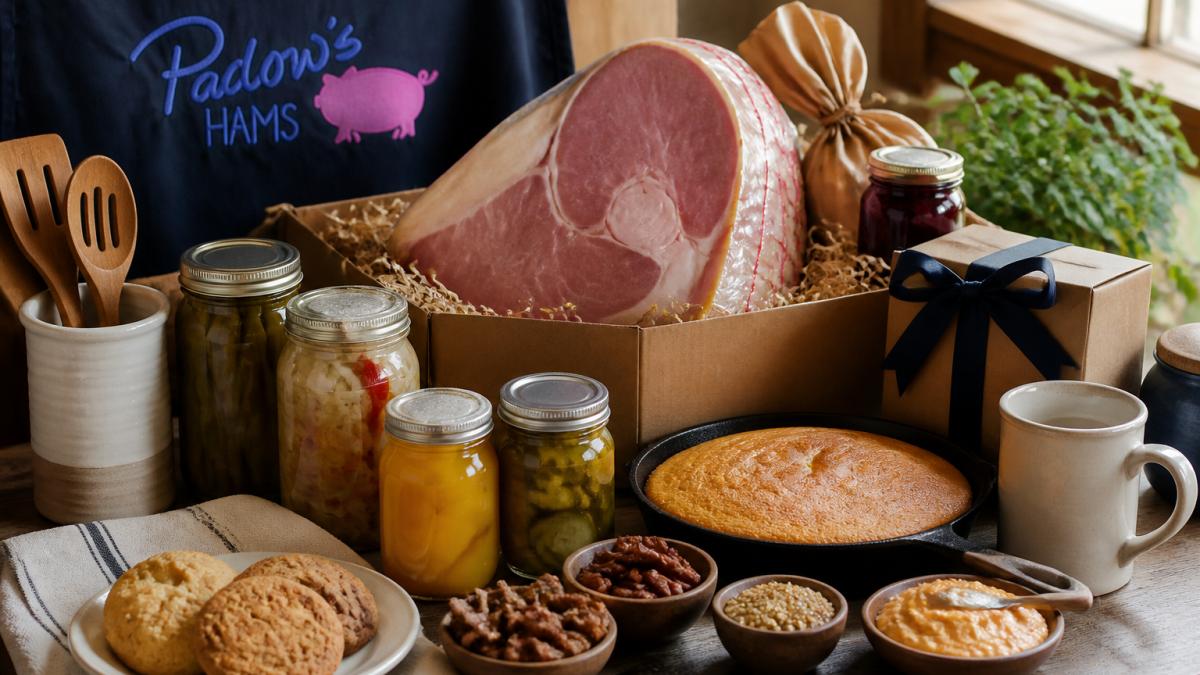
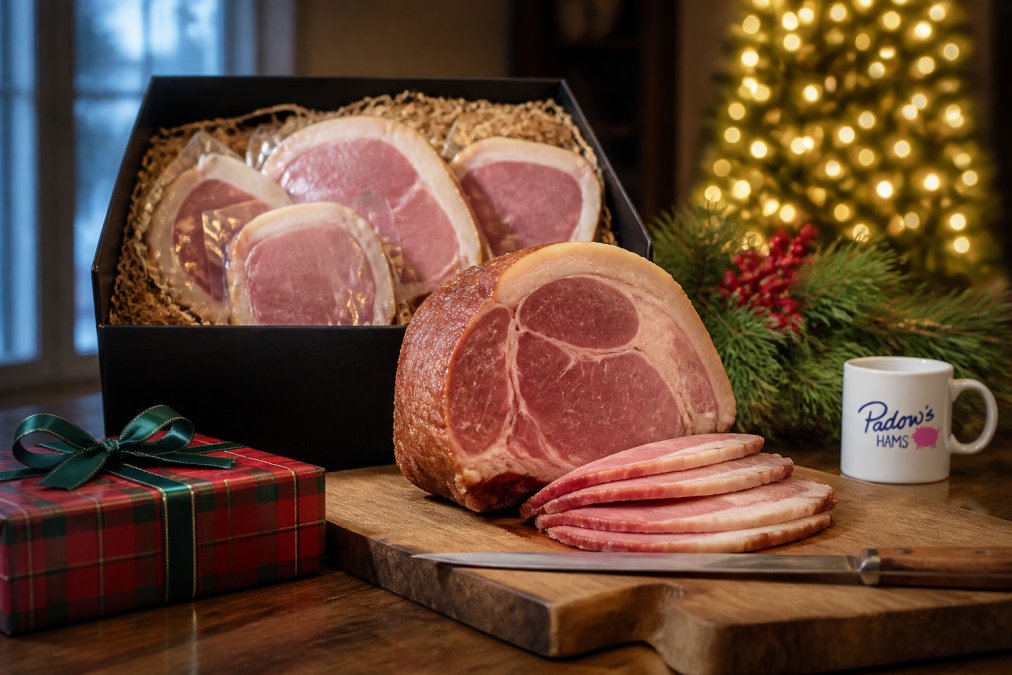
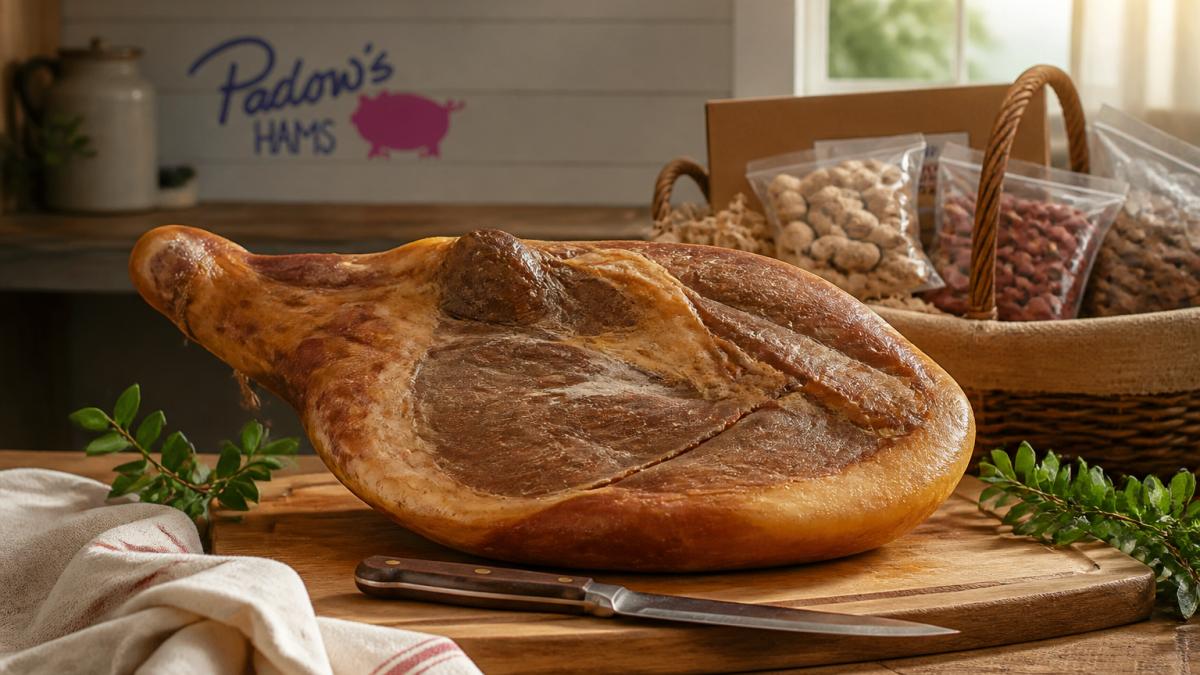
Virginia country ham gifts anchor a Southern table because the ham is the meal, not a side dish. We do not cure our hams ourselves; a distributor in Virginia follows the traditional Virginia salt cure recipe, and our hams are cured for three months before they reach you.
What to Expect from a Three-Month Salt Cure
A three-month cure is a slow process. The salt draws moisture out, the meat firms up, and the flavor deepens in a way that short-cured or brined hams cannot match.
Preparation is simpler than people fear. Country ham is typically sliced thin and pan-fried, or baked and glazed for a holiday centerpiece. You do not need to be an experienced cook to serve it well.
Virginia Peanut Gifts: The Sweet and Salty Southern Staple
Virginia peanut gifts are the quiet workhorse of Southern gifting. The region's peanuts are larger and nuttier than the common varieties, which makes them a natural fit for both savory snacking and sweet confections like brittle and clusters.
Peanuts also solve a real gifting problem: they are shelf-stable, they travel without special handling, and almost everyone can eat them.
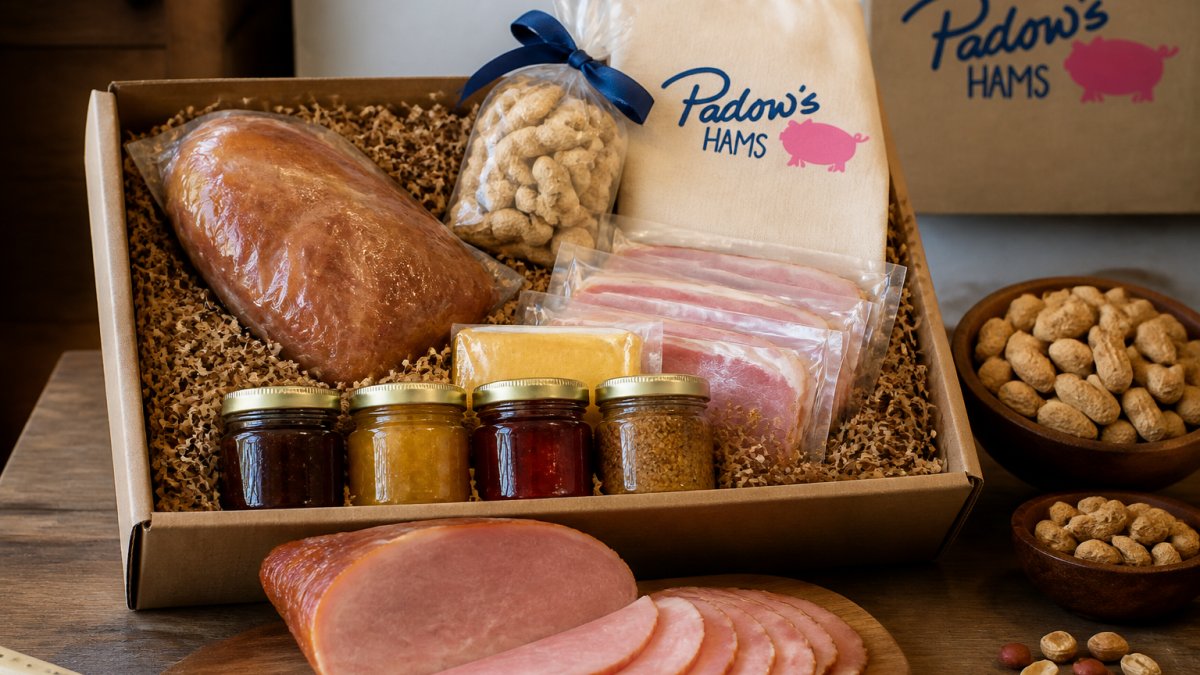
Pair them with a cured meat for a sweet-and-savory box, or send them alone as a lighter gift. Both work. The peanuts carry the regional signature either way.
Corporate Food Gift Boxes That Clients Actually Remember
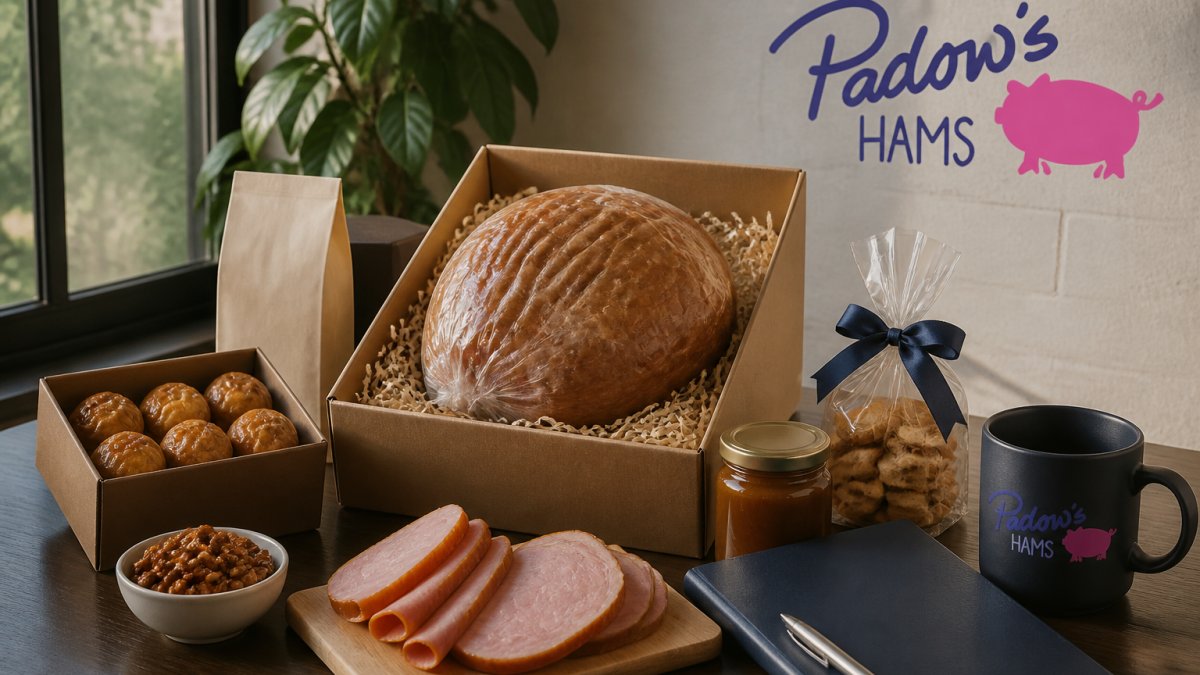
Corporate food gift boxes get remembered when they feel chosen for the recipient rather than pulled from a catalog. A generic branded mug gets tossed. A box built around a regional specialty gets talked about.
The logic is simple: corporate recipients receive a lot of forgettable gifts. Something with a story, a cured ham, a tin of regional peanuts, a box of preserves, stands out because it is specific.
Personalization and Presentation
Personalization does not require custom engraving. It can be as simple as matching the box to the recipient's taste: savory for the entertainer, sweet for the dessert person, a mixed box for the office. Presentation matters too, since a well-packed box signals care before anything is opened.
Ordering in volume is where planning pays off. Confirm delivery windows early, especially around the holidays, and ask about how items are packed for transit.
USPS shipping deadlines and holiday guidance
Regional Variety Within Southern Food Gift Baskets
Regional variety is what keeps southern food gift baskets from feeling interchangeable, and it is the angle almost no gift-basket listing bothers to explain. The South is not one cuisine. Treating it as one is why so many baskets read as generic. True regional specificity requires a nuanced understanding of local traditions that extends beyond the pantry, much like the refined sensibilities required to curate luxury tea gift baskets.
Here is a working framework you can use to match a box to a recipient. None of these regions owns a food exclusively, but each has a center of gravity:
- The Tidewater and coastal plain. Cured pork, peanuts, and preserved goods dominate. This is where the salt-cure tradition is strongest, and where a country ham reads as a signature rather than a novelty.
- The Piedmont. Biscuits, preserves, jams, and small-batch baked goods. A box built here leans sweet and breakfast-oriented.
- The mountains and highlands. Cured pork, apples, sorghum, and hearty baked goods. Smokier and heavier than a coastal box.
- The Gulf and low country. Rice, seafood-adjacent seasonings, and pepper-forward sauces. Harder to ship as a gift box because the best versions are perishable, which is why shelf-stable sauces and seasonings carry this region in gift form.
How to Match a Region to a Recipient
Most gift-givers do not know which region their recipient grew up in, and asking ruins the surprise. Use these proxies instead:
- If they talk about a grandmother's kitchen, lean Piedmont or mountain: preserves, biscuits, cured pork.
- If they entertain and cook for others, lean Tidewater: a cured ham centerpiece plus peanuts and preserves.
- If they are hard to shop for, lean shelf-stable and broadly likable: Virginia peanuts, sealed preserves, and a sweet confection.
- If they have ties to a specific state, lean into that state's signature rather than a general Southern assortment. Specificity is the whole point.
Building Variety Into One Box
You do not have to pick a single region.
What you should avoid is a box that claims regional variety but delivers three variations on the same snack. If every item is a cookie, the box is not varied, it is repetitive with better packaging.
Someone who grew up around country ham will read a three-month cure as a signal of quality, not a marketing line.
Frequently Asked Questions
What foods are typically included in a Southern gift basket?
Most authentic Southern food gift baskets combine a few core categories: a savory centerpiece like country ham, plus pantry items such as preserves, jams, and spreads. Nuts are common, especially Virginia peanuts and pecans. Many baskets also include cheese straws, crackers, biscuits or baking mixes, grits, and sweets like toffee or candy. The strongest baskets balance sweet and savory so the recipient gets variety, and they lean on regional specialties rather than generic snack foods.
What makes a Southern food gift basket authentic?
Authenticity comes down to provenance and method. Look for foods tied to a specific Southern tradition, such as salt-cured country ham aged for months, Virginia-grown peanuts, or stone-ground grits. Family recipes and long-established producers signal heritage. Packaging matters less than what's inside: a basket filled with regional staples made the traditional way reads as authentic, while one filled with mass-market snack items does not.
What Southern food gifts work well for corporate clients?
Corporate food gift boxes work best when the contents feel premium but easy to share. A country ham or a curated assortment of Virginia peanuts, preserves, and sweets suits clients and employees alike. Choose items with a clear regional story so the gift feels intentional rather than generic. Ordering in quantity helps with consistency, and shipping directly to each recipient saves coordination time. Confirm delivery windows with the vendor before the holidays.
Are Virginia peanuts a good addition to a food gift box?
Yes. Virginia peanuts are larger and crunchier than most varieties, which makes them a standout in any gift box. They pair well with both sweet and savory items, ship without spoiling, and carry a clear regional identity. For recipients who avoid meat or prefer lighter gifts, a peanut-focused box is a strong option. They also work as a lower-cost add-on alongside a larger centerpiece like country ham.
How do you choose a Southern food gift box for a business recipient?
Start with the recipient's tastes and dietary needs. If they entertain, a country ham or savory assortment fits. If they prefer lighter gifts, a peanut or preserve box works better. Check ingredient lists for allergens and note whether items need refrigeration. Confirm shipping timelines so the gift arrives before the occasion, and choose presentation that travels well. A short note explaining the regional heritage adds a personal touch.