 how-to
How to Prepare a Country Ham Centerpiece
Table of Contents
- Soaking Country Ham Instructions: Start Here
- Country Ham Cooking Time Per Pound
- Setting Up Your Roasting Pan and Oven
- Glazing and Basting for a Crisp, Golden Finish
- Monitoring Internal Temperature and Resting the Ham
- How to Carve a Country Ham Centerpiece
- Country Ham and Egg Breakfast Skillet
- Pairings, Side Dishes, and Plating Your Centerpiece
- Frequently Asked Questions
Last Updated: September 23, 2026
Soaking Country Ham Instructions: Start Here
Learning how to prepare country ham centerpiece starts with one step most hosts skip: soaking. A country ham is salt-cured, not fresh, so the soak pulls excess salt from the meat before it ever sees heat.
Here's the short version. Rinse the ham, cover it in cold water, and let it sit in the fridge. Change the water every 12 hours. A small ham needs about 12 hours; a large one needs a full day or more.
At Padow's Hams Co., our hams are cured for three months by a distributor in Virginia who follows the traditional salt cure recipe. That slow cure builds deep flavor, and it's exactly why soaking matters.
How Long to Soak Based on Size
Soak time tracks weight. Use this as your guide:
| Ham Size | Soak Time | Water Changes |
|---|---|---|
| 8-10 lbs | 12-18 hours | Every 12 hours |
| 12-14 lbs | 18-24 hours | Every 12 hours |
| 15-18 lbs | 24-36 hours | Every 8-12 hours |
A common mistake is soaking too long. Past 36 hours, the ham starts tasting flat. Pull it when the water runs only lightly salty.
Scrubbing and Trimming the Rind
After soaking, scrub the rind with a stiff brush under cool running water. This removes surface salt, mold, and pepper coating left from curing.
Then trim. Cut away the hard outer rind on the shank end and any dried edges. Leave the fat cap intact. That fat bastes the meat as it cooks and keeps it moist.
Country Ham Cooking Time Per Pound
Country ham cooking time per pound depends on your method. As a rule, plan 20 to 25 minutes per pound when simmering, or about 15 to 18 minutes per pound when roasting at 325°F.
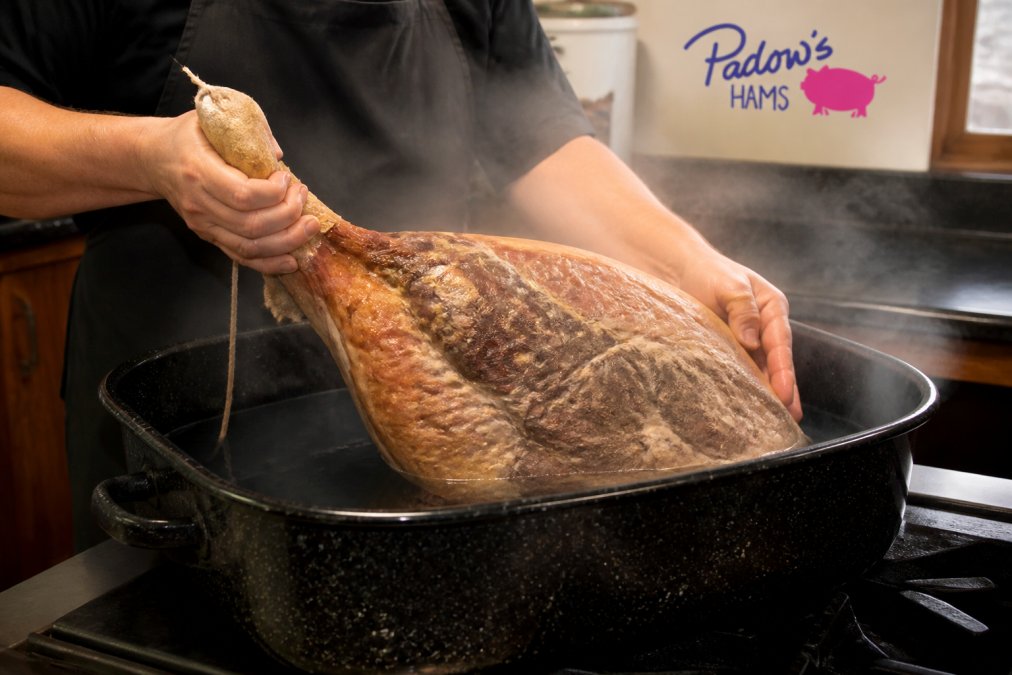
Weight drives everything. A 14-pound ham roasted at 325°F needs roughly 3.5 to 4 hours. The same ham simmered on the stovetop takes about 4.5 to 5 hours.
Simmering vs. Roasting: Which Method to Choose
Simmering is the gentler path. It cooks evenly and pulls more salt out. Choose it if you want a milder, tender result.
Roasting builds a firmer texture and a deeper color. Choose it if you want that classic glazed look on the table.
Equipment Troubleshooting: When Your Setup Does Not Match the Recipe
Most guides assume a standard oven and a pan that fits. Real kitchens rarely cooperate. Here is how to adapt.
Your ham does not fit the pan. A country ham needs a pan at least 3 inches deep, and the ham should sit with liquid reaching about an inch up the sides. If the ham overhangs, the drippings will burn on the oven floor. Use a disposable aluminum roaster set inside a sheet pan, or split the cook: simmer on the stovetop in a large stockpot, then transfer to the largest oven-safe vessel you own for the glaze stage.
Your oven runs hot or cold. Oven thermostats drift. An oven set to 325°F may actually run 300°F or 350°F, which shifts your timing by 30 minutes or more on a large ham. Use a separate oven thermometer and trust it over the dial. If your oven runs hot, drop the setting to 300°F and add time rather than risk drying the exterior.
You have a convection oven. Convection moves air and cooks faster, often by 15 to 25 percent. Drop the temperature to 300°F and start checking the internal temperature about 30 minutes earlier than the conventional timing suggests. The fan also dries surfaces faster, so keep the foil tent on longer and only uncover for the final glaze.
Your stovetop pot is too small. A whole country ham rarely fits a standard stockpot. If it does not, ask your butcher to cut the ham into a shank portion and a center portion. Cook the portions separately, or cook the center portion as the centerpiece and save the shank for soups and seasoning.
Managing Salt Content for Sensitive Palates
Salt is the defining trait of a country ham, and it is also the most common complaint. If you or your guests are watching sodium, you have more control than the recipe suggests.
Soak longer, not shorter. The soak is your primary salt lever.
Timing Checkpoints You Can Trust
Per-pound math gets you in the ballpark, but the internal temperature is the real signal. Insert a meat thermometer into the thickest part of the ham, away from bone and fat.
- At the halfway mark, check the temperature. You should be climbing steadily.
- If the temperature stalls, do not panic. Large cuts plateau as moisture evaporates. Give it another 30 minutes.
- Pull the ham at 160°F. Carryover cooking will push it a few degrees higher during the rest.
Setting Up Your Roasting Pan and Oven
Set the oven rack low and preheat to 325°F. Place the ham fat-side up in a deep roasting pan.
Glazing and Basting for a Crisp, Golden Finish
Glaze goes on late. Wait until the ham is nearly done, then uncover it and brush on your glaze every 15 minutes.
Cider Vinegar, Brown Sugar, and Molasses Glaze
This trio is the classic country ham finish. The vinegar cuts salt, the brown sugar adds shine, and the molasses brings depth.
Monitoring Internal Temperature and Resting the Ham
Use a meat thermometer. Cook the ham until the internal temperature hits 160°F in the thickest part, away from bone and fat.
How to Carve a Country Ham Centerpiece
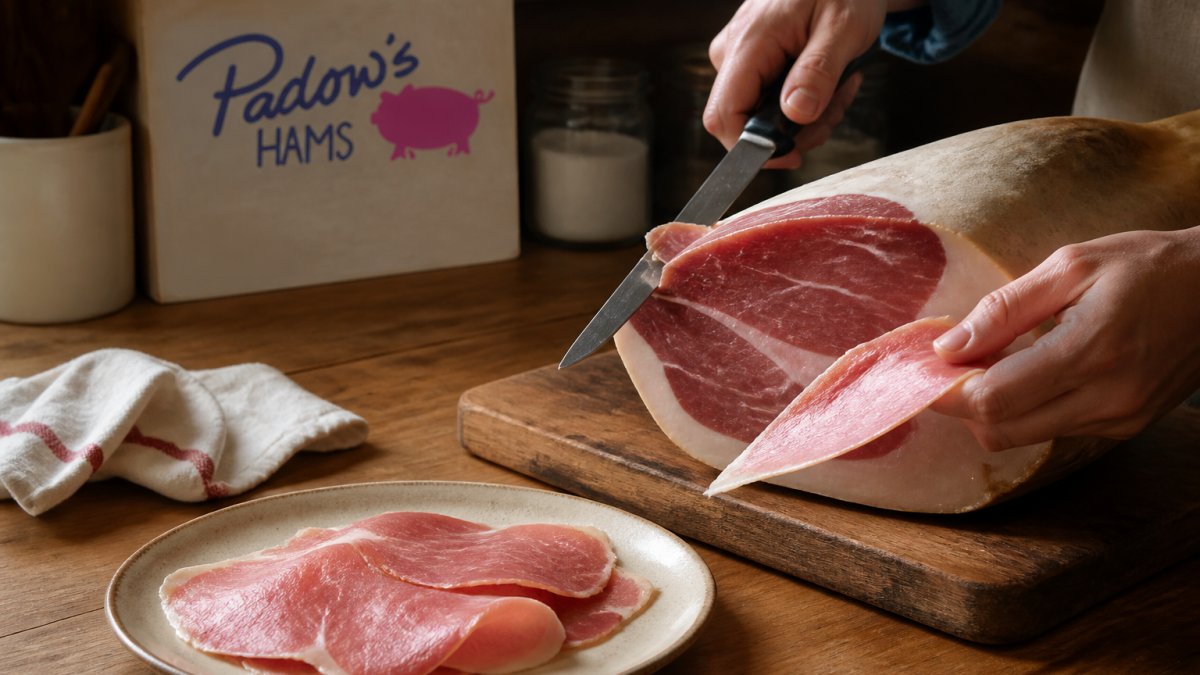
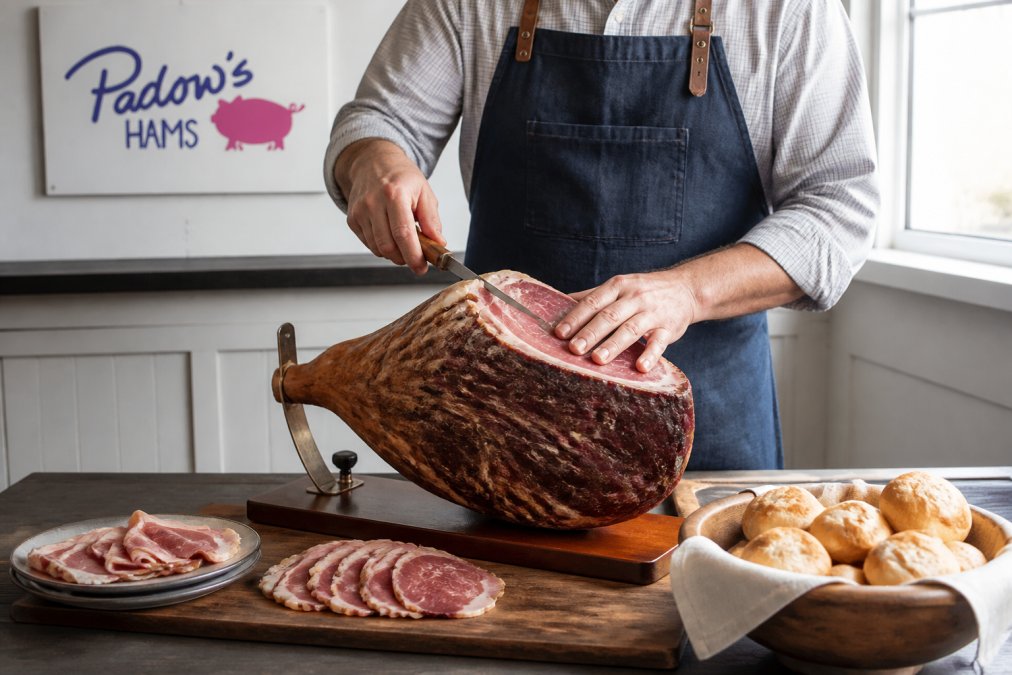
Carving a country ham centerpiece takes a sharp knife, a steady hand, and the right angle. Start at the shank end and work toward the center.
Bone-In vs. Boneless: Two Different Approaches
A bone-in ham is the traditional centerpiece, and the bone changes your technique. You cannot slice straight through it, so you work in sections.
Slicing Against the Grain for Even Portions
Find the grain, then cut across it. Slicing against the grain shortens the muscle fibers, so each bite stays tender.
- Keep the knife angled slightly
- Use long, smooth strokes, not sawing
- Rotate the ham as you work around the bone
How Much Meat You Actually Get
A bone-in country ham yields less carved meat than its weight suggests. The bone, the thick fat cap, and the rind all come off before or during carving.
Presentation and Plating the Carved Ham
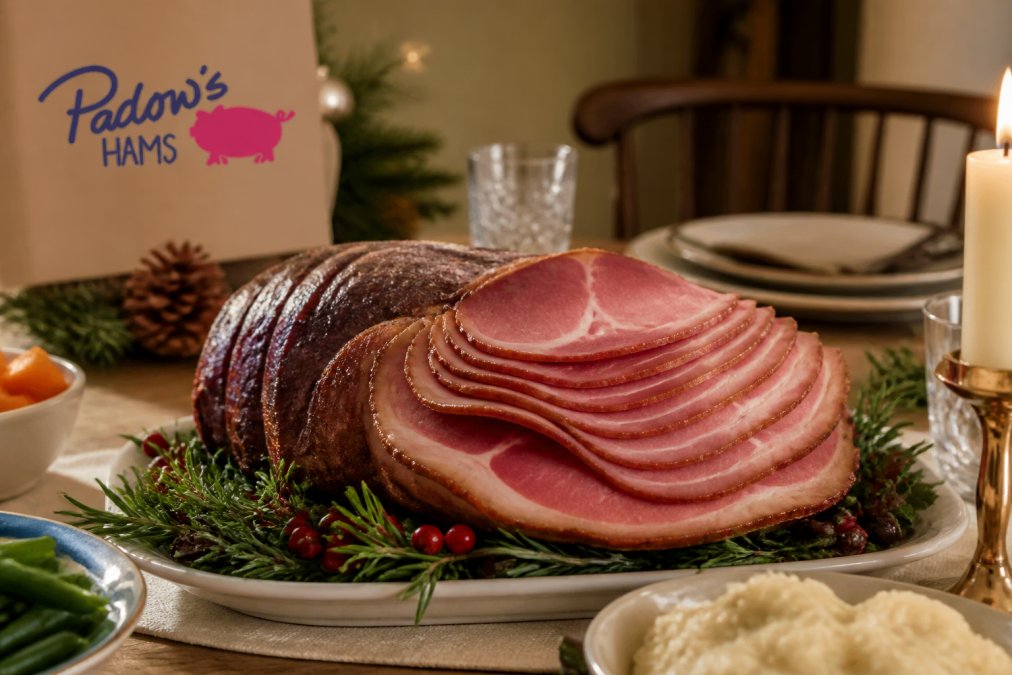
Fan the slices on a warm platter so they overlap like shingles. This keeps them moist and makes the platter look abundant.
Troubleshooting a Stubborn Bone
If your knife catches on the bone, stop and reset your angle rather than forcing it. Forcing the blade dulls the edge and tears the meat.
Country Ham and Egg Breakfast Skillet
Leftover ham earns its keep in a country ham and egg breakfast skillet. It's a fast, one-pan meal that uses up every carved piece.
Pairings, Side Dishes, and Plating Your Centerpiece
Pair country ham with sides that balance its salt. Think sweet, buttery, and bright.
Frequently Asked Questions
How long do you cook country ham in the oven?
The cooking time depends on the weight and method. For a whole country ham, plan about 20 minutes per pound at 325°F after soaking and simmering. A 12-pound ham typically needs 3 to 4 hours in the oven. Always verify doneness with a meat thermometer: the internal temperature should reach 160°F. If you are short on time, simmering the ham first reduces oven time significantly.
How do you properly soak a country ham before cooking?
Soaking removes excess salt and rehydrates the meat. Place the ham in a large container and cover it with cold water. Soak for 12 to 24 hours for a whole ham, or 4 to 6 hours for smaller cuts. Change the water every 4 to 6 hours. For a milder flavor, extend the soaking time. After soaking, scrub the rind with a stiff brush under running water to remove any surface mold or salt deposits.
What internal temperature should a country ham reach?
A country ham should reach an internal temperature of 160°F when measured with a meat thermometer inserted into the thickest part, away from bone and fat. This temperature ensures the ham is fully cooked and safe to eat. If you plan to glaze the ham, apply the glaze during the last 30 minutes of cooking to prevent burning. Always let the ham rest for 20 to 30 minutes after removing it from the oven before carving.
How do you carve a country ham for a centerpiece presentation?
First, let the ham rest for at least 20 minutes. Place it on a sturdy cutting board, fat side up. Use a sharp knife to make a vertical cut near the shank, then slice thin, even pieces perpendicular to the bone. For a centerpiece, arrange the slices on a warm platter, overlapping them slightly, and garnish with fresh herbs or fruit. Save the bone and trimmings for soups or the country ham and egg breakfast skillet.
Preparing a country ham centerpiece takes patience, but the payoff is a table nobody forgets. The soak, the slow cook, and the rest all protect the flavor that three months of curing built. Padow's Hams Co. has shipped authentic Virginia country hams nationwide since 1936, with traditional curing and aging methods behind every one. If you want a centerpiece that carries real Southern tradition to your holiday table, shop now with Padow's Hams Co.