 blog
Alternatives to Brown Sugar for Ham Glaze
Last Updated: November 17, 2026
Quick Summary
The best alternatives to brown sugar for a ham glaze are honey, maple syrup and fruit juice or preserves. Honey and maple syrup are the most common liquid swaps, while reduced juice or jam adds sweetness and acid. Each needs adjusting in quantity, liquid and oven time, since they brown differently from brown sugar.
- Use about 3/4 cup honey for every 1 cup brown sugar, and cut added liquid by 2 tablespoons.
- Simmer maple syrup 3 to 5 minutes with mustard or vinegar so it thickens before brushing.
- Reduce 1 cup of fruit juice to 1/2 cup before adding it to the glaze.
- Honey and maple syrup scorch faster, so tent the ham with foil if the surface darkens early.
Table of Contents
- Why Swap Out Brown Sugar in a Ham Glaze
- Honey and Maple Syrup as Brown Sugar Substitutes
- Fruit Juice and Preserves for a Fruity Ham Glaze
- A Simple 3-Ingredient Ham Glaze
- Sugar-Free Ham Glaze Options and Dietary Needs
- Glaze Texture, Browning and Troubleshooting
- Timing Your Glaze on a Ham You Ordered from Padow's
- Frequently Asked Questions
Why Swap Out Brown Sugar in a Ham Glaze
Brown sugar is the default in most ham glazes, but it is not the only way to get a sticky, caramelized finish. Many home cooks reach for honey, maple syrup or fruit when they want a different flavor or have run out of brown sugar in the pantry. Each choice changes the glaze's sweetness, color and how it browns in the oven.
Swapping sugars also gives you control over balance. Brown sugar adds a molasses note, while other sweeteners lean lighter, fruitier or sharper. Knowing those differences helps you match the glaze to a country ham or a spiral-cut ham, which are both naturally salty and savory.
Honey and Maple Syrup as Brown Sugar Substitutes
Honey and maple syrup are the two liquid sweeteners most cooks reach for first, but they behave differently from brown sugar in a glaze. Honey is sweeter per tablespoon and carries more water, and maple syrup is thinner still. That means you cannot swap them one-for-one without changing how the glaze coats, browns and sets.
Honey. Use about 3/4 cup of honey for every 1 cup of brown sugar the recipe calls for, and cut any added liquid in the glaze by about 2 tablespoons. Honey browns fast, so brush it on later in the bake and lower the oven temperature if the glaze starts to darken. A common pattern is to warm honey with mustard and a splash of vinegar so it spreads evenly instead of pooling.
Maple syrup. Maple syrup can stand in for brown sugar, but because it is thin, reduce other liquids in the glaze slightly. Maple is less sweet than honey and brings a woodsy, slightly bitter edge that pairs well with cured pork. Simmer it for 3 to 5 minutes with mustard or vinegar to drive off water and thicken it before brushing; straight from the bottle it runs off the ham and pools in the pan.
Watch out: honey and maple syrup both scorch faster than brown sugar near the end of roasting, so tent the ham with foil if the surface darkens before the interior is heated through.
| Substitute | Amount to replace 1 cup brown sugar | Flavor | How it browns | Adjustments |
|---|---|---|---|---|
| Honey | 3/4 cup | Bright, floral | Fast, can scorch | Cut added liquid by 2 tbsp; lower oven to 325°F |
| Maple syrup | 1 cup | Woodsy, lightly bitter | Moderate | Reduce other liquids by 2-3 tbsp; simmer to thicken |
| White sugar | 1 cup plus 1 tbsp molasses | Neutral, mild molasses note | Predictable | Dissolve in a little warm water first |
| Molasses | 1 cup (use alone only in small amounts) | Deep, bittersweet | Strong, darkens fast | Replace no more than half the brown sugar to avoid bitterness |
If you keep both honey and maple syrup on hand, a 50/50 blend gives you honey's fast browning with maple's deeper flavor and is more forgiving than either alone.
Fruit Juice and Preserves for a Fruity Ham Glaze
Fruit does two jobs in a ham glaze: it adds sweetness and it adds acid, which cuts the salt of a cured ham. But juice and preserves are not interchangeable, and the difference matters more than most recipes admit. Juice is mostly water, so it thins a glaze and needs reduction before it will cling. Preserves and jams already carry body and pectin, so they coat well but can burn if applied too early.
Juice. Use about 1/2 cup of juice to replace 1/4 cup of brown sugar, then simmer the juice down by half before adding anything else. Orange juice reduces to a bright, slightly bitter syrup; pineapple juice stays tangier and thinner; apple juice is mellow and reduces to a light amber. A common pattern is to reduce 1 cup of juice to 1/2 cup over medium heat, about 8 to 10 minutes, then whisk in mustard and a little vinegar off the heat.
Preserves and jams. Use 1/2 cup of jam or preserves to replace 1/2 cup of brown sugar. Apricot jam and apple jelly are the most neutral and take on mustard and vinegar well; cranberry sauce is sharper and works best with a pinch of cinnamon. Thin stiff preserves with 1 to 2 tablespoons of juice or vinegar so they brush on evenly instead of tearing the ham surface.
Watch out: preserves with visible fruit pieces can scorch on the exposed edges of a spiral-cut ham, so press them into the cuts and keep the oven at 325°F.
| Fruit option | Amount to replace 1/2 cup brown sugar | Body | Browning risk | Best pairing |
|---|---|---|---|---|
| Orange juice (reduced) | 1/2 cup, simmered to 1/4 cup | Thin syrup | Moderate | Mustard, cloves |
| Pineapple juice (reduced) | 1/2 cup, simmered to 1/4 cup | Thin syrup | Moderate | Ginger, soy |
| Apple juice (reduced) | 1/2 cup, simmered to 1/4 cup | Light syrup | Low | Cinnamon, mustard |
| Apricot jam | 1/2 cup | Thick, glossy | High | Dijon, vinegar |
| Apple jelly | 1/2 cup | Thick, clear | High | Mustard, thyme |
| Cranberry sauce | 1/2 cup | Chunky, tart | High | Orange zest, cinnamon |
If you have no juice and no preserves, a tablespoon of cider vinegar plus a tablespoon of honey in the glaze restores the sweet-sour balance fruit would have provided.
A Simple 3-Ingredient Ham Glaze
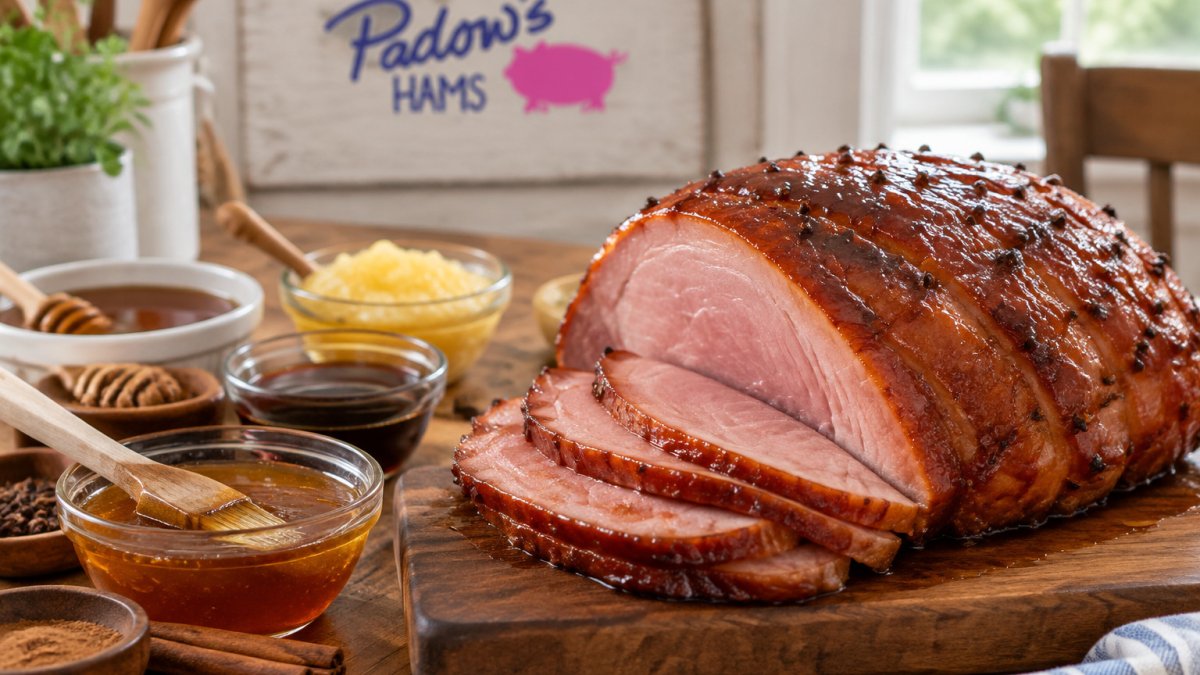
This glaze needs only three ingredients: honey, Dijon mustard and apple cider vinegar. Combine 1/2 cup honey, 2 tablespoons Dijon mustard and 1 tablespoon apple cider vinegar in a small saucepan. Warm over low heat until smooth, about 3 minutes.
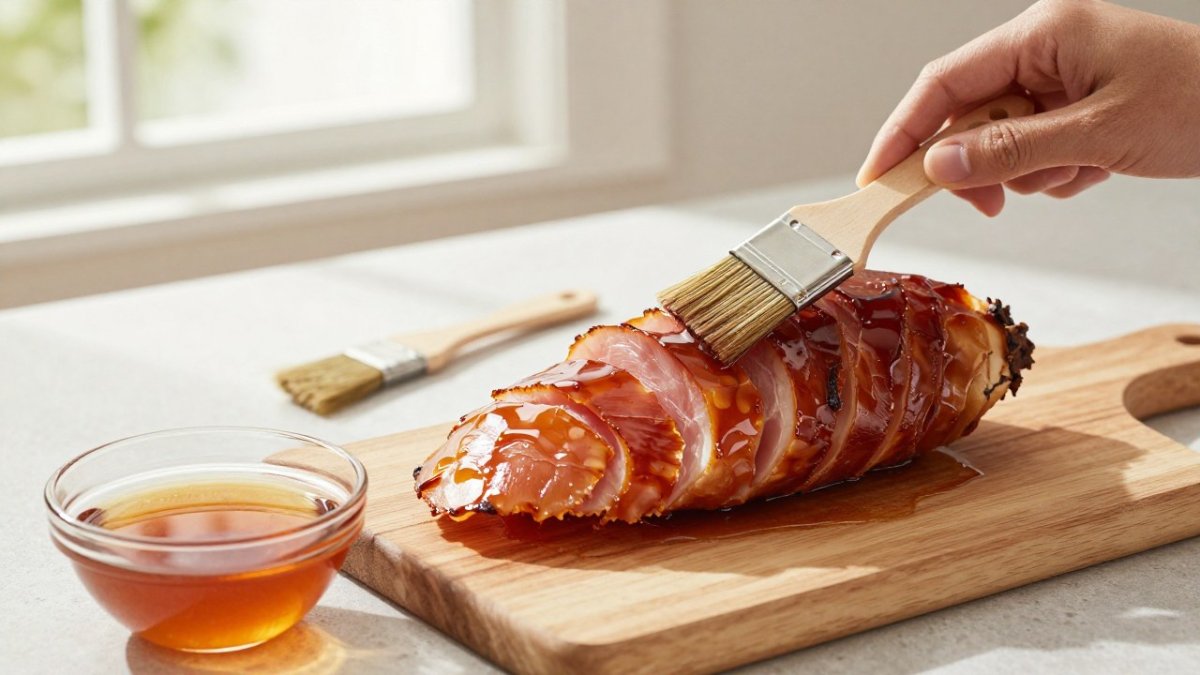
Brush the glaze over the ham during the last 20 to 30 minutes of baking, reapplying every 10 minutes. The mustard adds tang, the vinegar cuts the sweetness and the honey browns into a shiny finish.
!Hands brushing a glossy amber glaze onto a spiral-cut ham on a wooden cutting board
Sugar-Free Ham Glaze Options and Dietary Needs
Readers avoiding sugar can build a glaze around mustard, vinegar and a sugar-free sweetener. Mustard and apple cider vinegar create a tangy base, and a small amount of a sugar-free syrup can add sweetness and gloss.
Keep in mind that without sugar, the glaze will not caramelize the same way. Expect a lighter, more savory coating. Brushing the ham with the glaze in thin layers, then finishing under the broiler for a minute, helps create some color.
For low-carb and keto-friendly versions, skip fruit juice and preserves entirely and rely on spices such as cinnamon and nutmeg for warmth.
Glaze Texture, Browning and Troubleshooting
If the glaze is too thin, simmer it a few minutes longer to reduce it. If it is too thick, stir in a teaspoon of warm water or juice at a time. A glaze that will not stick usually needs another light brushing once the ham surface has dried slightly.
If the glaze darkens too fast, lower the oven temperature or tent the ham with foil. Sugary glazes burn quickly near the end of cooking, so check the ham often during the final stretch.
Watch out: never apply a glaze containing fruit juice or honey too early, since the sugars can scorch long before the ham is heated through.
Timing Your Glaze on a Ham You Ordered from Padow's
Timing depends on the cut. For a whole country ham, apply your homemade glaze in the final stretch of baking so the sugars brown without burning. Check cooking times and tips for spiral sliced hams before glazing a spiral cut. If you ordered a spiral sliced ham with a glaze pack, follow the timing on that package instead of a homemade glaze.
Because our hams are cured for three months, they already carry a deep, savory flavor, so a light glaze complements the ham rather than masking it. You can browse the Christmas ham options for a holiday glaze. Brush on the glaze, let it set for a few minutes, and serve warm or at room temperature.
Ready to compare cuts before you glaze? Our guide on bone-in vs. boneless ham walks through flavor, texture and cooking time to help you choose.
Frequently Asked Questions
What can I use instead of brown sugar in a ham glaze?
Honey, maple syrup, mustard, apple cider vinegar and fruit preserves all work as brown sugar substitutes in a ham glaze. Each brings a different flavor: honey gives a clean sweetness, maple syrup adds a deeper caramel note, and mustard or vinegar add the tang that balances the sugar. Start with a small amount, brush it on, and adjust sweetness to taste before glazing the whole ham.
Can I make a ham glaze without sugar?
Yes. A sugar-free ham glaze can rely on Dijon mustard, apple cider vinegar, a little orange juice concentrate and warm spices such as cinnamon or cloves. Without sugar the glaze will not caramelize the same way, so brush it on during the last 20 to 30 minutes of baking and watch the surface closely. Sugar-free glazes are a good fit for guests following low-carb or keto eating plans.
What can I use in a ham glaze instead of pineapple?
Orange juice, apple juice, apricot jam, apple jelly and cranberry sauce all add fruitiness without pineapple. Apricot jam and apple jelly thicken the glaze and help it cling to the ham, while juice thins it and adds brightness. Pair the fruit with a little mustard or vinegar so the glaze does not turn cloyingly sweet.
When should I apply glaze to a ham?
Apply glaze during the final 20 to 30 minutes of baking, not at the start. Sugars and fruit-based glazes can scorch if they cook too long, so brush on a layer, return the ham to the oven, and repeat once or twice. Check the ham's internal temperature and follow the reheating instructions that came with your ham before you begin.